Category: History

  • The Science of Touch

    How a Simple Handshake Shapes Our Brains

    In a world increasingly dominated by digital interactions, the simple act of a handshake might seem like a relic of a less connected past. Yet, this seemingly mundane physical exchange holds a surprising power, deeply rooted in our biology and with profound effects on our brains and emotional states. Far from being just a formality, a handshake is a sophisticated form of non-verbal communication, a brief but impactful sensory experience that can influence everything from our first impressions to the very neurochemistry of our brains.

    The science behind this lies in the intricate relationship between touch and our nervous system. Our skin, the body’s largest organ, is packed with millions of sensory receptors. These receptors are not all the same; some are designed to detect pressure, others temperature, and a specific set, known as C-tactile afferents, are particularly responsive to slow, gentle touch. These C-tactile fibers play a crucial role in processing the emotional and social aspects of touch, and they are found in abundance in the hairy skin, though the importance of touch on glabrous (non-hairy) skin, like the palms, is also recognized, especially in social contexts like handshakes.

    When we engage in physical contact, even something as brief as a handshake, a cascade of neurochemical events is triggered in the brain. One of the most significant players in this process is oxytocin, often dubbed the “love hormone” or “cuddle chemical.” Released in response to positive physical contact, oxytocin promotes feelings of trust, bonding, and social connection. A handshake, particularly a firm and friendly one, can stimulate the release of oxytocin, laying the groundwork for a sense of rapport and potentially increasing prosocial behaviors between individuals. Studies have shown that even a short period of touch can prime the brain to be more receptive to social signals and increase trust.

    Beyond oxytocin, handshakes and other forms of social touch can also influence the release of other crucial neurochemicals. Dopamine, a neurotransmitter associated with reward and pleasure, can be released, creating a positive association with the person we’ve interacted with. Endorphins, the body’s natural painkillers, can also be stimulated, contributing to a sense of well-being and potentially reducing stress. This neurochemical cocktail helps to explain why positive physical contact generally makes us feel good and fosters a sense of connection.

    The impact of a handshake isn’t limited to the release of feel-good chemicals; it also directly affects activity in various brain regions. Neuroimaging studies have shown that social touch, including handshakes, can activate areas of the brain involved in social cognition and emotional processing. Regions such as the amygdala, which plays a role in processing emotions, and the superior temporal sulcus, involved in understanding social cues, show increased activity during positive social interactions involving touch. Furthermore, the nucleus accumbens, a key part of the brain’s reward pathway, has been shown to be more active during handshakes compared to no-handshake interactions. This suggests that our brains are hardwired to find social touch, like a handshake, inherently rewarding.

    The psychological effects of this neurological activity are significant. A handshake can immediately begin to shape our perception of another person. A firm, confident handshake is often associated with positive personality traits like extroversion and confidence, influencing initial judgments in settings from job interviews to business meetings. Conversely, a weak or avoidant handshake can create a less favorable impression. This highlights the power of this simple gesture in establishing credibility and fostering a sense of connection from the outset.

    Moreover, the act of shaking hands can serve to break down social barriers and create a sense of equality and mutual respect. It is a reciprocal action, requiring both parties to willingly engage, which can help to establish a level playing field for the interaction that follows. In situations that might otherwise be tense or formal, a handshake can inject a moment of human connection, easing anxiety and promoting a more open exchange. Research even suggests that a handshake preceding a social interaction can not only enhance the positive impact of a favorable encounter but also diminish the negative impact of a less favorable one, acting as a kind of social buffer.

    While the focus here is on handshakes, it’s important to remember that they are just one form of social touch. The broader science of touch underscores its vital role in human development, well-being, and social bonding throughout life. From the comforting embrace of a caregiver in infancy to the supportive touch of a friend, physical contact is fundamental to our emotional and psychological health.

    In an era where interactions are increasingly mediated by screens and keyboards, recognizing the profound science behind physical touch, even in its simplest forms like a handshake, is more important than ever. It serves as a powerful reminder that despite our technological advancements, we remain fundamentally social creatures, hardwired for connection, and that a simple touch can have a remarkable impact on our brains, our emotions, and our relationships. So, the next time you extend your hand to greet someone, take a moment to appreciate the intricate dance of biology and psychology that is about to unfold – a testament to the enduring power of human connection, one handshake at a time.

  • Beyond the Grip

    Eye Contact, Posture, and the Complete Handshake

    The handshake, that brief physical connection, is often analyzed for its pressure alone. We dissect the firmness, critique the duration, and ponder the cultural implications of the grip itself. However, to truly master the art of the greeting, we must look beyond the clasp and consider the constellation of non-verbal cues that transform a simple hand-to-hand contact into a powerful moment of connection – or disconnection.

    The handshake doesn’t exist in a vacuum. It’s a focal point within a broader landscape of body language. One of the most crucial elements is eye contact. A direct, yet not overly intense, gaze signals sincerity, engagement, and confidence. It conveys that you are present in the moment and genuinely acknowledging the person you are meeting. Darting eyes or looking away can suggest nervousness, disinterest, or even untrustworthiness, undermining the positive intent of your grip, no matter how perfectly executed. Imagine offering a firm, welcoming handshake while simultaneously scanning the room – the message becomes muddled and insincere.

    Equally important is your posture. Standing tall with your shoulders relaxed and your body angled slightly towards the person you are greeting communicates openness and respect. Slouching or leaning away can project indifference or a lack of confidence, again detracting from the impact of your handshake. Think of it this way: an upright posture creates an open canvas for your handshake to land positively, while a closed or slumped posture erects a subtle barrier.

    The accompanying smile (when appropriate to the context) further enhances the warmth and approachability of your greeting. A genuine smile reaches your eyes and signals friendliness and goodwill. A forced or absent smile can feel insincere and create an awkward disconnect with the physical act of the handshake.

    Furthermore, consider the timing and fluidity of the entire interaction. Extend your hand confidently but not aggressively. Allow the handshake to naturally conclude after a few brief pumps. An abrupt withdrawal can feel dismissive, while a lingering hold can feel uncomfortable. The transition into and out of the handshake should be smooth and natural, complementing the other non-verbal cues.

    Even subtle cues like the position of your other hand can convey meaning. Keeping it relaxed at your side is generally neutral. In some cultures, briefly placing your other hand on the person’s forearm during the handshake can signify warmth and sincerity, but be mindful of cultural norms as this can be perceived as overly familiar in others.

    In essence, the complete handshake is a symphony of non-verbal communication. The grip provides the foundational note, but eye contact, posture, smile, and overall demeanor create the melody. By consciously coordinating these elements, you can elevate your greeting from a mere formality to a genuine moment of human connection, leaving a lasting positive impression that extends far beyond the pressure in your palm. Mastering these subtle cues allows you to communicate confidence, respect, and genuine engagement, solidifying the power of that initial encounter.

  • A Martian Grip

    A Martian Grip

    The Delicate Dance of Handshakes on the Red Planet

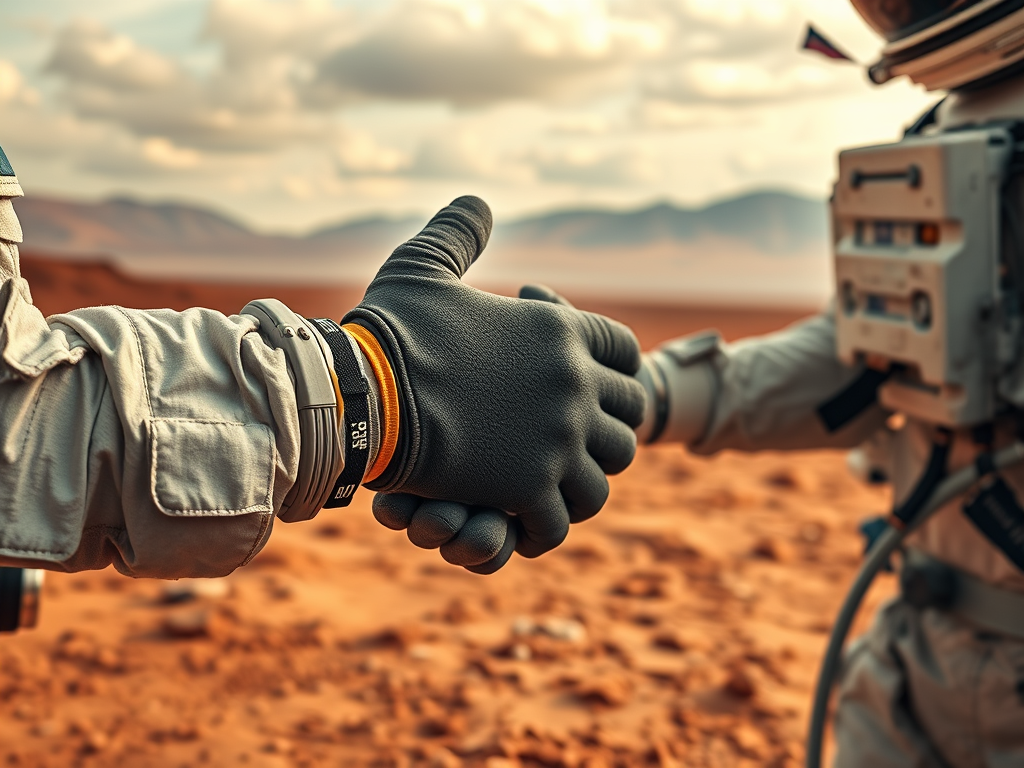
    The simple act of shaking hands, a universal gesture of greeting and agreement on Earth, takes on a whole new level of complexity on Mars. With its thin atmosphere, frigid temperatures, and pervasive dust, a Martian handshake becomes a carefully choreographed event. Let’s delve into the intricacies of this potential future social interaction.

    Differences from Earthly Handshakes:

    • Suit Constraints:
      • Martian explorers will be encased in bulky pressurized suits. This significantly limits dexterity and tactile feedback. Traditional handshakes, relying on subtle pressure and grip, become challenging.
      • The gloves of a spacesuit are rigid, reducing the ability to feel the other person’s hand. Therefore the hand shake becomes more of a visual confirmation of greeting, rather than the feeling of the hand shake.
    • Atmospheric Pressure:
      • Mars’s atmospheric pressure is less than 1% of Earth’s. This means that a breach in a spacesuit, even a small one during a handshake, could have severe consequences.
      • Therefore any hand shake must be done with extreme care.
    • Dust Contamination:
      • Martian dust is fine and pervasive, easily clinging to surfaces. Spacesuit seals and joints are vulnerable to dust contamination, which could lead to leaks or mechanical failures.
      • This makes cleaning the gloves of the space suit before and after the hand shake a high priority.
    • Temperature Extremes:
      • Mars experiences extreme temperature variations. Spacesuit gloves must maintain a stable temperature, and any physical contact could affect this balance.
      • Extra care must be taken to not damage the heating elements within the gloves.

    Safe Handshake Protocol:

    1. Suit Integrity Check:
      • Before any physical contact, both individuals must perform a thorough suit integrity check, ensuring all seals and joints are secure.
    2. Gloves Cleaning:
      • Clean the exterior of the gloves with a specialized dust removal tool.
    3. Controlled Grip:
      • Extend the gloved hand and establish a firm but gentle grip. Avoid excessive pressure or sudden movements.
    4. Visual Confirmation:
      • Due to limited tactile feedback, rely on visual confirmation of the handshake.
    5. Post-Handshake Inspection:
      • After the handshake, inspect the gloves and suit seals for any signs of damage or contamination.
    6. Decontamination:
      • After returning indoors, the space suits, and especially the gloves, must go through a strict decontamination proceedure.

    Should We Shake Hands on Mars?

    • While the gesture itself is symbolic, the risks involved are significant. Spacesuit integrity is paramount, and any unnecessary physical contact increases the potential for breaches.
    • In the early stages of Martian exploration, prioritizing safety and mission objectives is crucial.
    • However, as Martian colonies grow, and space suit technology improves, there may be a place for a modified Martian handshake.
    • Instead of the standard earth hand shake, perhaps a simple light tapping of the space suit gloves would suffice. This would allow for a cultural exchange, while reducing the risk of suit damage.
    • Ultimately, the decision of whether or not to shake hands on Mars will depend on a careful balance of cultural significance and safety considerations.

    In conclusion:

    The Martian handshake is a fascinating concept that highlights the challenges and adaptations required for human life on another planet. While the risks are currently high, future technological advancements and evolving social norms may pave the way for a unique Martian greeting.

  • William McKinley’s Canine Diplomacy: When the President Taught His Dog to Shake Hands

    As the 25th President of the United States, William McKinley was known for his statesmanship and diplomatic prowess. However, few are aware of his unique approach to international relations – one that involved a rather unlikely ambassador, his beloved German Shepherd.

    Determined to leave a lasting impression on foreign dignitaries, McKinley spent countless hours training his canine companion to walk upright and extend a paw in a formal handshake. The sight of the President’s dog greeting visiting officials with such poise and decorum was a spectacle that quickly became the talk of political circles.

    McKinley’s unconventional tactic proved remarkably effective, serving as a disarming icebreaker that helped put even the most stoic of world leaders at ease. By leveraging the inherent charm and charisma of his four-legged friend, the President was able to forge deeper connections and navigate delicate negotiations with a unique flair that was distinctly “American.”

    While this canine diplomacy may seem quirky by today’s standards, it stands as a testament to McKinley’s innovative spirit and his unwavering commitment to projecting a strong, yet approachable, image of the United States on the global stage.

  • How A Handshake Saved Christmas

    Once upon a time, in a small town nestled in the snowy mountains, Christmas was on the brink of disaster. The townspeople were filled with despair as they realized that their beloved tradition of exchanging gifts had been jeopardized. It seemed that all hope was lost until an unexpected hero emerged – a simple handshake.

    The story began when the town’s toy factory experienced a devastating fire just days before Christmas. With all their toys destroyed, the children were left without presents to open on that magical day. The townspeople were heartbroken and desperately searched for a solution.

    In this dire situation, a young boy named Timmy approached his elderly neighbor, Mr. Johnson. Timmy had heard stories about Mr. Johnson’s remarkable ability to bring people together through his warm and firm handshakes. With nothing to lose, Timmy asked Mr. Johnson for help.

    Mr. Johnson understood the gravity of the situation and immediately sprang into action. He invited every person in town to gather at the town square on Christmas Eve, where he planned to orchestrate something extraordinary.

    As night fell and snowflakes gently blanketed the ground, the townspeople arrived at the square with anticipation in their hearts. They huddled together for warmth as Mr. Johnson stepped onto a makeshift stage.

    With his voice filled with conviction and compassion, Mr. Johnson addressed the crowd about unity and resilience during difficult times like these – reminding them that it is not material possessions but rather love and support that truly make Christmas special.

    Then came the moment everyone had been waiting for – Mr. Johnson extended his hand outward towards one person in front of him who reciprocated with their own handshake while saying heartfelt words of encouragement and hope.

    One by one, each person followed suit until an intricate web of interconnected hands formed throughout the entire crowd – symbolizing their shared determination to salvage Christmas despite adversity.

    The power of this simple gesture reverberated through every soul present. It reminded them of the strength that lies within their community and the importance of coming together in times of need.

    Inspired by Mr. Johnson’s call to action, the townspeople rallied together to create handmade gifts for every child in town. They worked tirelessly, using their individual talents and skills to bring joy back into the hearts of their little ones.

    On Christmas morning, as the children woke up to find beautifully wrapped presents under their trees, they couldn’t help but feel an overwhelming sense of gratitude and love. The spirit of Christmas had been restored, all thanks to a simple handshake that ignited a chain reaction of goodwill and generosity.

    From that day forward, the townspeople never forgot the power of unity and compassion. They continued to rely on each other during challenging times, knowing that together they could overcome any obstacle – just as they did when a handshake saved Christmas.

    And so, this heartwarming tale serves as a reminder that even amidst adversity, there is always hope. It teaches us that sometimes it takes a small act of kindness or a simple gesture to make a world of difference – just like a humble handshake can save not only Christmas but also our spirits.

  • One hot handshake

    One hot handshake

    In the annals of history, there are few events as tragic and cataclysmic as the Great Chicago Fire. It is a story that has been told and retold, capturing the imagination of generations. However, what many may not know is that this devastating inferno was ignited by an unexpected source – a showboating handshake artist.

    In the late 19th century, Chicago was a bustling city on the rise, known for its innovative architecture and vibrant spirit. It was during this time that an individual with an affinity for elaborate handshakes arrived in town. This person’s talent for intricate hand movements and flamboyant greetings quickly gained attention and admiration from locals.

    One fateful evening, in a crowded gathering at a local tavern, this showboating handshake artist found himself at the center of attention. Eager to impress his audience with his dexterity and flair, he initiated an elaborate handshake with another individual.

    Unbeknownst to both parties involved, fate had other plans in store. As their hands intertwined in a complex web of movements, disaster struck. A sudden jolt caused by an accidental misstep sent a nearby lantern crashing to the ground.

    The consequences were immediate and catastrophic. The flames from the lantern rapidly engulfed nearby structures made primarily of wood due to Chicago’s rapid expansion at that time. The fire spread uncontrollably throughout the city streets, leaving destruction in its wake.

    Thousands lost their lives as a result of this reckless handshaking incident turned tragedy. Homes were reduced to ashes; businesses were obliterated; lives were forever changed.

    The Great Chicago Fire serves as a somber reminder of how even seemingly innocuous actions can have far-reaching consequences. It highlights the importance of caution and mindfulness in our daily interactions – even something as simple as a handshake can have unforeseen ramifications.

    As we reflect on this tragic event from history, let it serve as a reminder to approach our actions with thoughtfulness and respect. May we learn from the mistakes of the past and strive to create a safer, more considerate world in which accidents like these become nothing more than distant memories.

  • The Lincoln handshake

    The Lincoln handshake

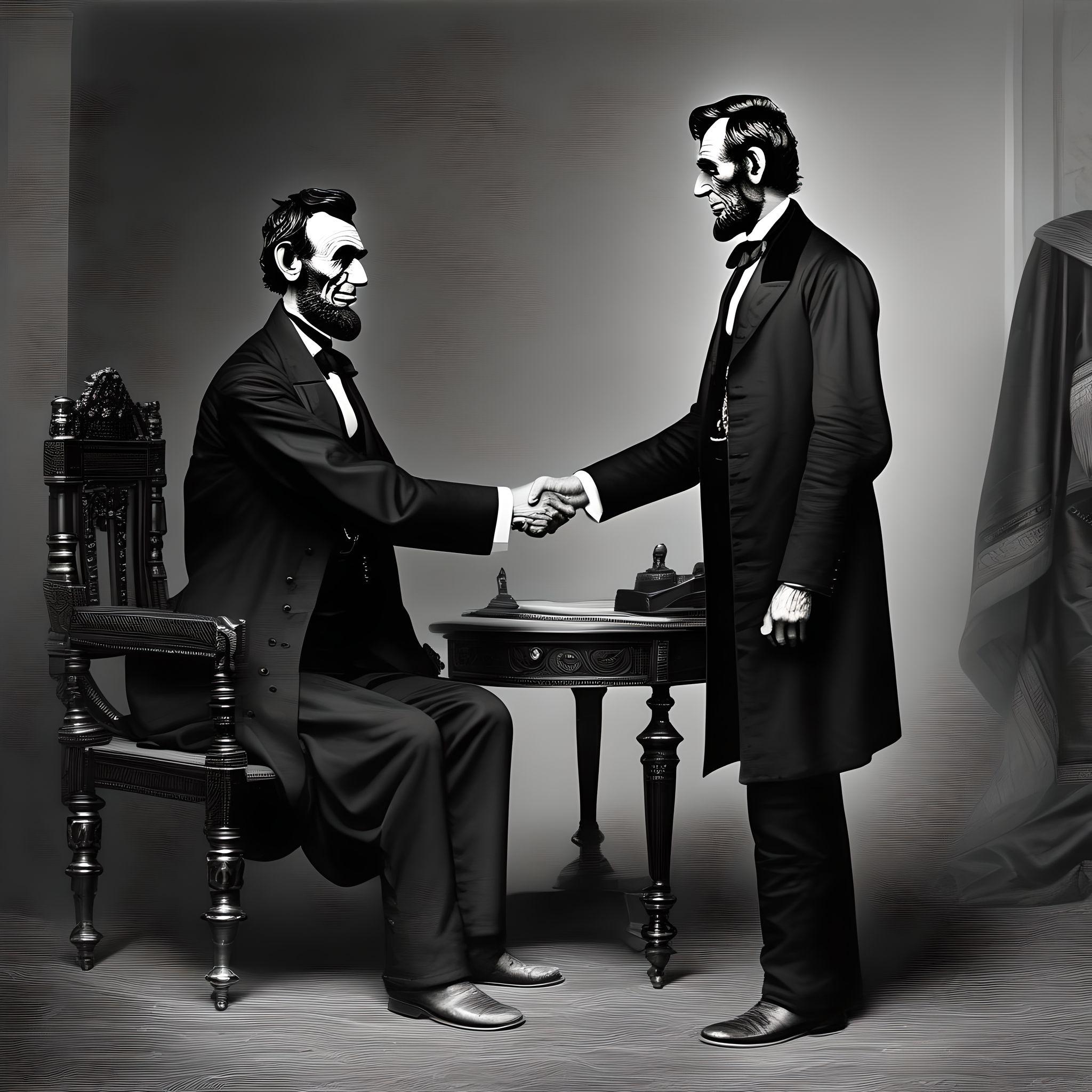
    One of the most intriguing aspects of the Civil War was how President Abraham Lincoln strategically utilized handshakes to win support and maintain unity during this tumultuous time in American history.

    Lincoln understood the power of personal connection and used handshakes as a tool to build trust and forge alliances. By engaging in this simple yet profound gesture, he was able to bridge divides and rally individuals towards a common cause.

    Handshakes allowed Lincoln to establish rapport with military leaders, politicians, and citizens alike. He would often visit troops on the front lines, shaking hands with soldiers and listening to their concerns. This act of solidarity not only boosted morale but also showcased his genuine care for those fighting for the Union.

    Furthermore, Lincoln’s handshake diplomacy extended beyond military circles. He would frequently meet with political opponents, engaging in thoughtful conversations and extending his hand as a symbol of reconciliation. These encounters helped ease tensions and fostered a sense of unity among factions that were deeply divided.

    In addition to personal interactions, Lincoln’s use of handshakes extended into public addresses. His speeches were carefully crafted to resonate with audiences from all walks of life. By incorporating relatable anecdotes and emphasizing shared values, he effectively shook hands metaphorically with listeners across the nation.

    The power of Lincoln’s handshake strategy cannot be understated. It served as a tangible reminder that despite differing opinions or backgrounds, everyone had a stake in preserving the Union. Through this simple gesture, he was able to navigate through one of America’s darkest periods by building bridges rather than walls.

    In conclusion, President Abraham Lincoln skillfully employed handshakes as a means to win support during the Civil War era. His ability to connect on a personal level through this universal gesture played an integral role in fostering unity among military leaders, politicians, and citizens alike. The legacy of his handshake diplomacy serves as an enduring testament to the power of human connection in times of adversity

  • Origin Story

    Origin Story

    The history of the handshake is a fascinating journey that dates back centuries. While it is difficult to pinpoint the exact moment when the first handshake took place, it is believed to have originated in ancient times as a gesture of peace and trust.

    The handshake has been an integral part of human interaction across various cultures and civilizations. It symbolizes mutual respect, agreement, and goodwill. Over time, its significance has evolved, but its essence remains the same – a physical connection that transcends words.

    As for who invented the handshake, there isn’t a specific individual credited with its creation. Rather, it seems to have emerged organically as a universal gesture of greeting and camaraderie. Its origins can be traced back to ancient Greece and Rome, where handshakes were used as a symbol of trust between warriors.

    Throughout history, the handshake has endured as a timeless tradition that transcends cultural boundaries. It has become deeply ingrained in our social fabric and continues to be an essential part of formal introductions and agreements worldwide.

    So next time you extend your hand for a handshake, remember that you are participating in a ritual with roots that stretch back through time – connecting you with countless individuals who have done the same throughout history.