Blog

  • The Definitive Ranking of the Top 25 Animal Handshakes

    The Definitive Ranking of the Top 25 Animal Handshakes

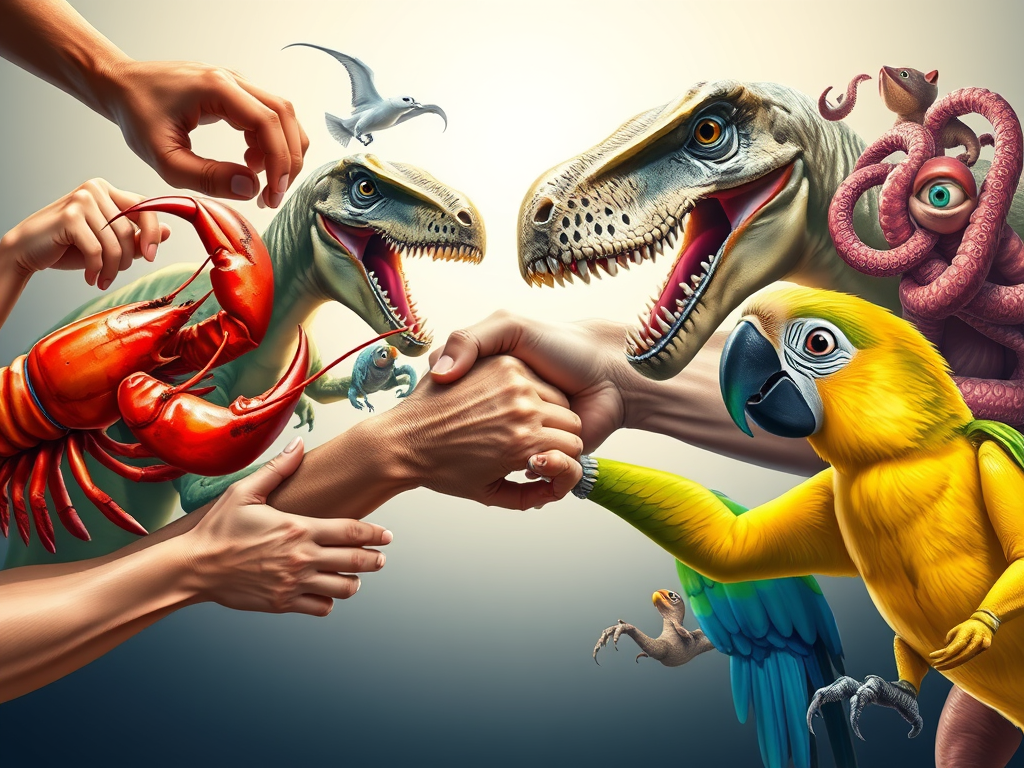
    Here is the definitive ranking of animals, from the “barely trying” to the “virtually human.”

    We often talk about the firm squeeze of a CEO or the limp-fish flop of a disinterested nephew, but today we are looking beyond our species. The animal kingdom is full of graspers, clutchers, and claspers. But who can actually shake hands like a human? We analyzed 25 candidates based on three key metrics: Thumb Opposability (TO), Grip Dexterity (GD), and Social Willingness (SW).

    Here is the definitive ranking of animals, from the “barely trying” to the “virtually human.”


    Tier 5: The “Technically It’s a Limb” Category

    25. The American Lobster

    • The Shake: “The Vice Grip”
    • Verdict: Terrifying. While the lobster technically offers a pincer that resembles an outstretched hand, the lack of fingers and the presence of crushing hydraulic pressure make this a handshake to avoid. It’s less “Nice to meet you” and more “I am removing your thumb.”

    24. Tyrannosaurus Rex

    • The Shake: “The Ghost”
    • Verdict: Included for historical context. The T-Rex had the spirit, but the biomechanics were tragic. The arms were too short to bridge the social distance required for a formal introduction. A handshake that ends before it begins.

    23. The Octopus

    • The Shake: “The Clinger”
    • Verdict: Too enthusiastic. A handshake requires a release; the octopus doesn’t understand this. With hundreds of suckers and no bones, the texture is all wrong—slimy, cold, and clingy. Plus, shaking one arm often implies consent to shake the other seven.

    22. The Chameleon

    • The Shake: “The Pincer”
    • Verdict: Chameleons possess zygodactylous feet (two toes forward, two back), creating a clamp-like grip. However, they move in slow, shuddering steps and usually mistake your finger for a branch. Zero eye contact.

    21. The Parrot

    • The Shake: “The Footer”
    • Verdict: Birds like Macaws and Cockatoos are highly intelligent and often lift a foot to greet owners. While charming, shaking a foot while the other party is standing is a breach of etiquette. The talons also tend to pierce the skin, ruining the diplomatic effect.

    Tier 4: The Reluctant & The Confused

    20. The Squirrel

    • The Shake: “The Jitterbug”
    • Verdict: Squirrels have surprisingly dexterous little hands for manipulating acorns. However, their grip is frantic and scratchy. They treat your hand less like a partner and more like a tree bark surface to be scaled.

    19. The Three-Toed Sloth

    • The Shake: “The Slow-Mo”
    • Verdict: By the time the sloth has raised its arm to meet yours, the networking event is over. Their long, curved claws act as hooks rather than grippers. They don’t squeeze; they just hang there.

    18. The Opossum

    • The Shake: “The Reverse Thumb”
    • Verdict: North America’s only marsupial has an opposable thumb (hallux)—but it’s on their hind feet. Trying to shake hands with an opossum involves an awkward leg lift that looks more like a yoga pose than a greeting.

    17. The Kangaroo

    • The Shake: “The Boxer”
    • Verdict: Kangaroos have five-fingered hands that are great for grappling. The problem is they usually use this grip to hold you in place while they kick you in the ribs. A firm grip, but the hostility score is too high.

    16. The Domestic Cat

    • The Shake: “The Dead Fish”
    • Verdict: Can a cat shake hands? Yes. Will it? Only if there is a high-value treat involved, and even then, the “shake” is a limp, disdainful tap on your palm. It is the handshake of a monarch dismissing a peasant.

    Tier 3: The Honorable Mentions

    15. The Polydactyl Cat

    • The Shake: “The Mitten”
    • Verdict: Ranking slightly higher than standard cats due to the “Ernest Hemingway” gene. These cats possess extra toes, giving their paws a broad, baseball-glove appearance that feels surprisingly substantial in the hand. Still suffers from the classic feline attitude problem.

    14. The Grizzly Bear

    • The Shake: “The High Five”
    • Verdict: Bears have plantigrade paws (walking flat-footed like humans) and can rotate their forearms. Circus history proves they can learn the gesture. However, without a true opposable thumb, it’s just a flat slab of meat. Also, the risk of mauled shoulders keeps them out of the top 10.

    13. The Sea Otter

    • The Shake: “The Holder”
    • Verdict: Sea otters hold hands while sleeping to stop drifting apart. This is arguably the purest form of hand-holding in nature. However, for a business handshake, it’s too intimate. Plus, they keep rocks in their armpits.

    12. The Giant Panda

    • The Shake: “The False Thumb”
    • Verdict: Pandas have a unique sesamoid bone in their wrist that acts as a “false thumb” for gripping bamboo. It works for eating, but in a handshake, it feels bony and rigid. A clumsy greeter.

    11. The Spider Monkey

    • The Shake: “The Hook”
    • Verdict: Evolutionarily, the Spider Monkey lost its thumb to swing better through trees. Their hand is four long fingers forming a meat-hook. You can shake it, but you can’t lock it. It feels unfinished.

    Tier 2: The Contenders

    10. The Raccoon

    • The Shake: “The Sensory Wash”
    • Verdict: Raccoons lack thumbs but make up for it with hypersensitive palms. They have 5x more mechanoreceptors in their hands than most mammals. Shaking hands with a raccoon is a tactile experience; they will feel every ridge of your fingerprint. The downside? Their hands are often wet because they douse everything in water.

    9. The Capuchin

    • The Shake: “The Hustler”
    • Verdict: The classic “organ grinder” monkey. They have thumbs (though not fully opposable in the human sense) and high dexterity. They understand the exchange. However, their handshake often feels transactional, like they are checking for a coin in your palm.

    8. The Baboon

    • The Shake: “The Politician”
    • Verdict: Baboons have some of the best opposable thumbs outside of the great apes. Their precision grip is elite. However, a baboon handshake is often accompanied by a baring of teeth and intense eye contact that signals dominance. A very aggressive networker.

    7. The Orangutan

    • The Shake: “The Leather Glove”
    • Verdict: With four long fingers and a short thumb, the Orangutan’s hand is designed for hooking branches. Their grip strength is roughly 5-7 times that of a human. The skin is leathery and dry. It’s a slow, powerful shake that commands respect, though the short thumb makes the “lock” difficult.

    6. The Gorilla

    • The Shake: “The Crusher”
    • Verdict: The Gorilla hand is massive, with short, thick fingers. It’s like shaking a catcher’s mitt made of granite. The thumb is opposable but relatively small compared to the massive palm. A Gorilla handshake is a life-changing event that requires you to be very submissive unless you want your radius bone snapped.

    Tier 1: The Handshake Elite

    5. The Koala

    • The Shake: “The Double-Clutch”
    • Verdict: The Koala is the dark horse of this list. Why? Two opposable thumbs on each hand. That is not a typo. The Koala’s hand consists of two thumbs and three fingers, allowing for a pincer-like grip that is biologically superior for grasping branches—and hands. It is the most secure grip in the animal kingdom. If a Koala shakes your hand, you are shook.

    4. The Border Collie (representing all Dogs)

    • The Shake: “The Good Boy”
    • Verdict: Anatomically, dogs are a disaster—no thumbs, just toes and pads. But functionally? They are the masters. We have bred them for thousands of years to perform this specific trick. The enthusiasm, the paw placement, the eye contact—the Dog Shake scores a 10/10 for Social Willingness, even if the Grip Mechanics are a 2/10.

    3. The Bonobo

    • The Shake: “The Empath”
    • Verdict: Bonobos are our closest relatives (alongside chimps) but are far less aggressive. A Bonobo handshake is gentle, warm, and eerily human. Their hands are long and slender. The only risk is that Bonobos use handshakes (and other touches) to resolve all conflicts, so the handshake might linger a little too long and become… awkward.

    2. The Chimpanzee

    • The Shake: “The Mirror”
    • Verdict: The gold standard of non-human gripping. The Chimpanzee hand is nearly identical to a human’s, albeit with a shorter thumb and longer palm. They use tools, they groom, and they grasp with intent. A chimp’s handshake conveys strength, texture, and temperature that is 99% human. It is the Uncanny Valley of handshakes.

    1. The Human

    • The Shake: “The Original”
    • Verdict: We tried to find a champion in the wild, but after reviewing 24 other species, we must concede the title. The human hand, with its long, fully opposable thumb and distinct muscle control, was evolutionarily designed for this exact gesture. No other animal can execute the “squeeze, pump, release” with the same level of nuance. We are the kings of the shake.

    Don’t agree with our rankings? Reach out to us (with an open palm) in the comments below.
  • The 10 Most Important Handshakes in Human History

    The 10 Most Important Handshakes in Human History

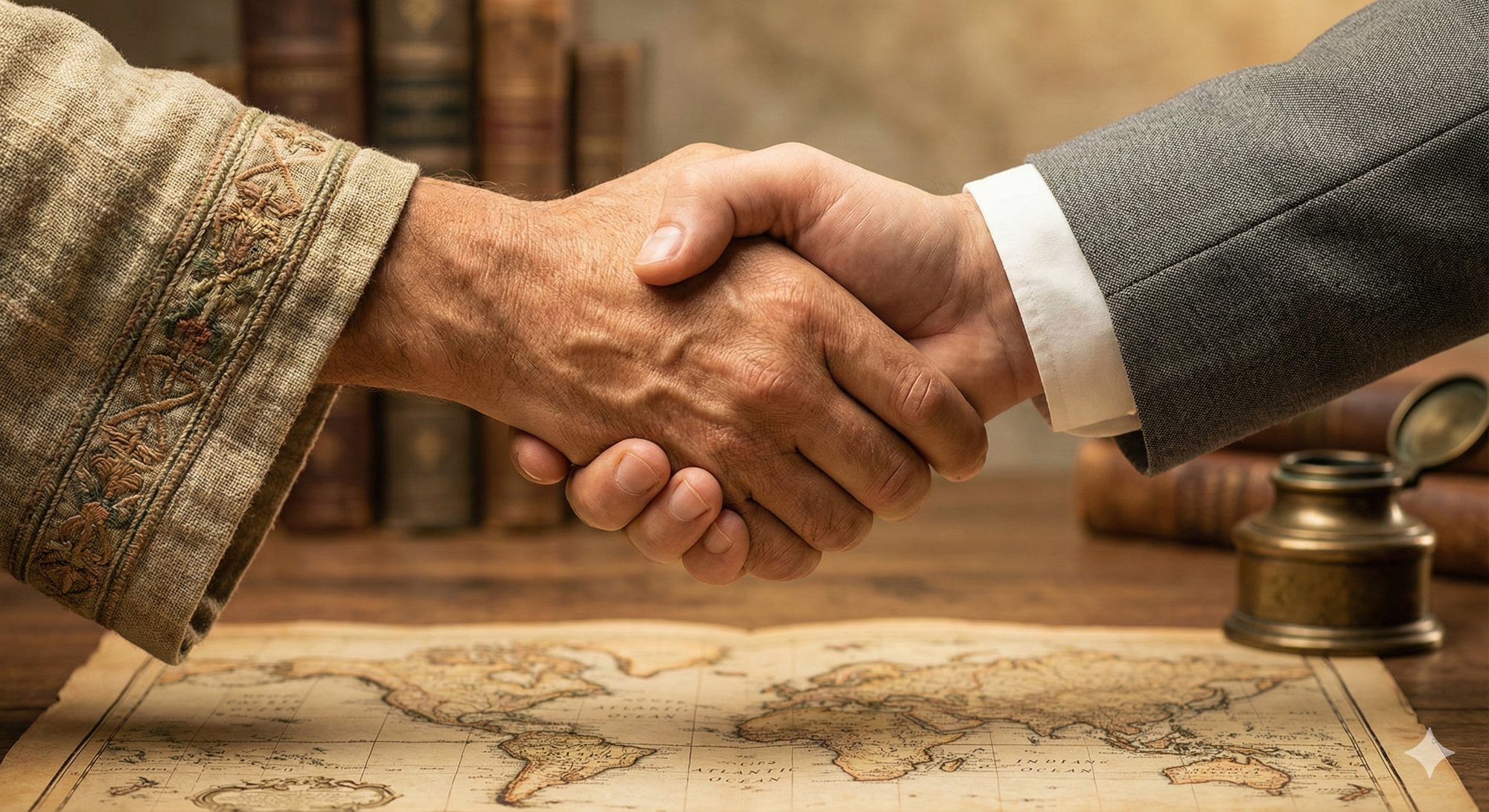
    The simple act of extending a hand is one of our most ancient and enduring gestures. While it began as a way to prove one wasn’t carrying a weapon, the handshake has evolved into a profound symbol of trust, reconciliation, and the forging of new eras.

    In a world often defined by complex treaties and digital signatures, these ten moments prove that a single physical connection can change the course of human history.

    10. King Shalmaneser III and King Marduk-Zakir-Shumi I (9th Century BC)

    The oldest “recorded” handshake in history isn’t found in a photograph, but on a stone relief. Discovered in modern-day Iraq, this ancient carving depicts the Assyrian King Shalmaneser III clasping the hand of the Babylonian King Marduk-zakir-shumi I to seal an alliance. It is the first tangible evidence we have that humans have used this gesture to bridge political divides for nearly 3,000 years.

    9. Ulysses S. Grant and Robert E. Lee (1865)

    The climax of the American Civil War was defined by a quiet moment in a parlor at Appomattox Court House. While the formal surrender was written on paper, it was the civil, respectful handshake between the two generals that signaled the beginning of a long, painful healing process for a fractured nation.

    8. The Apollo-Soyuz Handshake (1975)

    At the height of the Cold War, two rival superpowers met in the most unlikely of places: low Earth orbit. When American astronaut Thomas Stafford and Soviet cosmonaut Alexei Leonov opened their respective hatches and shook hands through the docking module, it signaled that even the vastness of space could be a place of cooperation rather than conflict.

    7. Queen Elizabeth II and Martin McGuinness (2012)

    This was a handshake many thought would never happen. Martin McGuinness, a former IRA commander, and Queen Elizabeth II, the monarch whose cousin had been killed by an IRA bomb, met in Belfast to shake hands. It was a staggering display of “the politics of the possible,” helping to solidify the peace process in Northern Ireland through sheer symbolic grace.

    6. Kim Jong-un and Moon Jae-in (2018)

    In a moment that captivated the globe, the leaders of North and South Korea met at the Military Demarcation Line. They didn’t just shake hands; they stepped across the concrete border together. While long-term peace remains elusive, the image of these two men holding hands across a line that had been a scar for 65 years was a powerful reminder of shared heritage.

    5. Anwar Sadat and Menachem Begin (1977)

    When Egyptian President Anwar Sadat traveled to Jerusalem to meet Israeli Prime Minister Menachem Begin, it was a move of incredible personal and political bravery. Their handshake, later formalized at the Camp David Accords, led to the first-ever peace treaty between Israel and an Arab neighbor—a feat that earned both men the Nobel Peace Prize.

    4. Richard Nixon and Mao Zedong (1972)

    For over two decades, the United States and the People’s Republic of China were locked in a diplomatic deep freeze. Nixon’s visit to Beijing changed everything. His handshake with Chairman Mao was the physical manifestation of “the week that changed the world,” realigning global power structures and opening the door to the modern global economy.

    3. Nelson Mandela and F.W. de Klerk (1990)

    As Nelson Mandela walked out of Victor Verster Prison after 27 years, he didn’t emerge with a fist of vengeance, but an open hand. His subsequent handshake with President F.W. de Klerk signaled the dismantling of Apartheid. It was the moment the world realized that South Africa was moving toward a “Rainbow Nation” rather than a civil war.

    2. Ronald Reagan and Mikhail Gorbachev (1985)

    When these two leaders met for the first time in Geneva, the world was on the brink of nuclear catastrophe. Their initial handshake, captured by hundreds of cameras, was the first thaw in a decades-long winter. It set the stage for the INF Treaty and the eventual peaceful end of the Soviet Union, effectively concluding the Cold War.

    1. Yitzhak Rabin and Yasser Arafat (1993)

    On the South Lawn of the White House, with President Bill Clinton standing behind them with arms outstretched, Israeli Prime Minister Yitzhak Rabin and PLO Chairman Yasser Arafat reached out and shook hands. It was a moment of profound hope that felt, at the time, like the impossible becoming possible. Though the peace process later faced tragic setbacks, this remains the most iconic handshake in modern history—a testament to the idea that even the most bitter enemies can choose to touch palms and try for peace.

  • The Etymological Grip

    The Etymological Grip

    A History of the Handshake in Literature and Culture

    The simple clasp of two hands—a universally recognized gesture of greeting, agreement, and farewell—is one of humanity’s oldest rituals. Yet, the word we use to name this ritual, “handshake,” is surprisingly modern. Its first appearance as a compound noun in literary works dates back to the very cusp of the 19th century, specifically the year 1801. This late coinage in English literature marks an interesting cultural moment: the point at which a gesture practiced for millennia became a distinct, formal noun.

    From Gesture to Noun: A Late Arrival

    While the noun “handshake” only emerged in 1801, its root phrase, “to shake hands,” has a far deeper literary pedigree. The action of “shaking hands” to signify agreement, amity, or resolution was already a familiar concept in the 16th century, finding its way into the works of literary giants.

    Perhaps the most famous example comes from William Shakespeare, who wrote in As You Like It (c. 1599) of a reconciliation where two quarreling parties “shook hands and swore brothers.” Similarly, a 1594 sonnet by Michael Drayton includes the line, “Since there’s no help, come let us kiss and part,” which invites the parting lovers to “shake hands for ever, cancel all our vows.” In these contexts, the phrase denoted a dramatic sealing of a bargain or the final termination of an affair—a profound, non-verbal signature.

    The adoption of the shorter, punchier noun “handshake” in 1801 suggests a key shift. The action had become so common, so integrated into everyday social life—especially as a standard greeting—that it required a dedicated title. It was no longer just an action to seal a momentous vow; it was an established ritual for any quotidian encounter.

    The Deep Roots: From Homer to Quakers

    The concept of the handshake, often called dexiosis (meaning “joining of the right hands”) by the ancient Greeks, predates the English word by thousands of years.

    • Ancient Pledges: The epic poet Homer frequently described characters grasping hands in the Iliad and the Odyssey to demonstrate trust and make pledges. An ancient Assyrian relief from the 9th century B.C. even depicts King Shalmaneser III clasping the hand of a Babylonian ruler to seal a treaty. In these early instances, the gesture was primarily one of alliance and peace, a way for two armed men to show they held no weapons.
    • The Ritual of Farewell: In 4th and 5th-century B.C. Greek funerary art, the handshake was a recurring motif on gravestones, symbolizing the eternal bond between the living and the deceased or a final, peaceful farewell.
    • Egalitarianism and the Quakers: The gesture experienced a strong cultural resurgence in the 17th century, popularized by groups like the Quakers in Britain. They favored the simple, unpretentious handclasp as an egalitarian alternative to the highly hierarchical rituals of bowing, curtsying, and hat-tipping, which signified social rank. By extending the handshake to everyone regardless of station, the gesture was imbued with a democratic, anti-establishment spirit.

    The Victorian Etiquette Wars

    The 19th century, the era immediately following the coining of “handshake,” was when the ritual truly diffused across all classes and became the standard greeting we know today. However, this popularization wasn’t without controversy.

    As the handshake spread, etiquette manuals began to emerge, often debating the proper way to execute it. In the high society of Victorian Britain, the handshake was sometimes looked down upon as a vulgar, overly familiar “English innovation”—especially by travelers who observed its rampant use in the republican, less-formal United States.

    Gender complicated the matter, too. For a time, it was considered improper for a man to initiate a handshake with a woman; the lady had to offer her hand first—a final, formal remnant of the gesture’s earlier, more ritualized uses, battling the democratic spirit the Quakers had instilled.

    The Handshake in the Modern Era: A Barometer of Society

    The 19th and 20th centuries solidified the handshake as the ultimate social and professional shorthand. By the time the world entered the era of global commerce and diplomacy, the quality of the handshake became a subject of intense scrutiny, particularly in American culture.

    Psychologists, business coaches, and self-help gurus began dissecting the perfect grip. The “dead fish” (a limp, cold hand) was universally condemned as a sign of weakness or apathy, while the “bone crusher” (an overly aggressive grip) was seen as a dominant or even hostile display. The ideal became the “firm, dry clasp”—a signal of confidence, honesty, and professional respect. The handshake evolved from a mere transactional gesture (sealing a peace treaty or a farewell) into a crucial tool of personal branding.

    In literature and film, the handshake became a powerful narrative device. A hesitant handshake could signify distrust; a refusal to shake hands, a deep, irreconcilable animosity. It provided a moment of high tension or immediate reconciliation, allowing the audience to gauge the true power dynamics between characters without a single word being spoken. The silent, almost cinematic language of the gesture—now formally enshrined as the noun “handshake” since 1801—had become fully integrated into our storytelling toolkit.

    The 21st Century Disruption

    For over 200 years, the formal “handshake” remained almost unchallenged as the default greeting in Western society. However, the 21st century has introduced significant friction into this ancient ritual.

    The rise of digital communication first began to challenge in-person contact, making the firm clasp feel almost anachronistic in a world of casual text messages and remote work. But the true, unprecedented disruption came in 2020 with the global pandemic. Health concerns suddenly transformed the simple, friendly gesture into a potential vector for contagion. Public health authorities worldwide advised against shaking hands, resulting in a rapid shift toward alternative greetings: the elbow bump, the fist bump, the “namaste” bow, or simply a friendly wave.

    This global pause forced a profound cultural reflection. Did we truly need the handshake? Was it worth the risk? While many returned to the handshake as the public health crisis subsided, the debate remains, and a lingering reluctance in certain social settings persists. The handshake is no longer an automatic, thoughtless gesture; it is now a deliberate choice, often requiring a momentary non-verbal negotiation between two people.

    The Complete Story of the Grip

    From the ancient Assyrian relief depicting a diplomatic agreement to the Quaker meeting house where it symbolized radical equality, and finally, to the modern dilemma of viral transmission, the joining of hands has always been more than just a greeting.

    The history of the handshake is the story of human civilization’s need for verifiable trust. It started as a practical demonstration of peace—I carry no weapon. It evolved into a legal and social sign-off—I agree to this vow. And finally, when the action became so standard it needed a name, the word “handshake” was coined in 1801, cementing its status as the social default.

    Today, whether you offer a firm handshake or opt for a simple wave, you are participating in a conversation that spans thousands of years. The grip may change, and its necessity may be debated, but its function remains vital: it is a non-verbal compact, a momentary meeting of two individuals acknowledging mutual presence and respect. The power of the handshake, whether literary or literal, endures, silently binding us to the long, rich history of human connection.

  • The Art of the Grip: Ranking Cinema’s Most Memorable Handshakes

    From tense introductions to heartfelt farewells, handshakes in cinema often transcend a simple greeting, becoming pivotal moments that define character relationships, shift plot trajectories, or simply offer a moment of pure, unadulterated cool. While some are iconic for their power and symbolism, others are memorable for their awkwardness or sheer absurdity. Here, we delve into the annals of film history to rank 10 of the best handshakes, from the less impactful to the truly legendary.


    10. The Awkward Introduction – The Hot Chick (2002)

    Sometimes, a handshake is memorable for all the wrong reasons. In The Hot Chick, when Rob Schneider’s character (in a woman’s body) attempts to greet someone, the result is a cringe-inducing, fumbling mess. It’s a testament to how a simple gesture can go horribly awry, highlighting the comedic potential of social discomfort. While not “best” in terms of execution, its sheer awkwardness makes it unforgettable.

    9. The Competitive Grip – Hot Shots! (1991)

    Charlie Sheen and Cary Elwes deliver a hilariously over-the-top competitive handshake in Hot Shots!1 This parody of macho posturing sees the two characters escalating a simple greeting into a test of strength and endurance, complete with exaggerated grunts and strained expressions. It’s a comedic gem that perfectly skewers the alpha-male trope.

    8. The “Secret” Handshake – The Parent Trap (1998)2

    For anyone who dreamed of having a secret language with a sibling, the elaborate handshake shared by Annie James and Martin in The Parent Trap is pure delight.3 It’s intricate, playful, and perfectly captures the bond between the twins and their butler. It’s a handshake that signifies a shared history and a playful conspiracy.

    7. The Bro-Shake – Grown Ups 2 (2013)

    The Grown Ups franchise is built on the camaraderie of its cast, and their handshakes often reflect this. In Grown Ups 2, the extended and often ridiculous bro-shakes between the characters are a running gag, showcasing their long-standing friendships and goofy antics. They might not be graceful, but they’re undeniably full of character.

    6. The Unexpected Connection – Jaws (1975)

    The initial handshake between Chief Brody and Matt Hooper in Jaws is understated but significant. It’s a brief moment of professional respect and burgeoning camaraderie between two men who will soon face a terrifying challenge together. It sets the stage for their partnership and the tense journey ahead.

    5. The Handshake of Awesomeness – Girl Meets World (TV Show, but iconic)4

    While primarily a TV show, the “Handshake of Awesomeness” from Girl Meets World deserves a mention for its sheer popularity and intricate choreography. It’s a perfect example of a pop culture handshake that resonated with a generation, symbolizing friendship and shared experiences. Its complexity and widespread recognition make it a standout.

    4. The Business Deal – The Fast and the Furious 6 (2013)

    Dwayne “The Rock” Johnson’s character, Luke Hobbs, delivers what could be described as “handshake torture” to a smug London security official in The Fast and the Furious 6. This isn’t a friendly greeting; it’s a display of dominance and a means to extract information. It’s a power move disguised as a handshake, showcasing Hobbs’ intimidating presence.

    3. The Emotional Embrace – Die Hard (1988)

    At the climax of Die Hard, John McClane and Sgt. Al Powell finally meet face-to-face, and their handshake is more of an emotional clinch. After hours of communicating only by radio, this physical connection is a powerful moment of relief, respect, and shared trauma. It’s a handshake that signifies the end of a harrowing ordeal and the beginning of a deep, unspoken bond.

    2. The Bromance Ritual – Community (TV Show, but iconic)5

    Troy and Abed’s handshakes in Community are legendary. These elaborate, ever-evolving rituals are more than just greetings; they are a symbol of their unique and unbreakable bromance. Each handshake is a mini-performance, showcasing their quirky personalities and deep connection. While from a TV show, their impact on pop culture and the sheer creativity of their handshakes earn them a high spot.

    1. The Ultimate Power Grip – Predator (1987)

    Undoubtedly the most iconic and testosterone-fueled handshake in cinematic history belongs to Dutch (Arnold Schwarzenegger) and Dillon (Carl Weathers) in Predator. This isn’t just a handshake; it’s a battle of biceps, a silent declaration of alpha status, and a visual representation of raw, unadulterated power. The bulging muscles and strained expressions make it a moment of pure 80s action movie gold, solidifying its place as the undisputed champion of movie handshakes.


    From comedic fumbles to displays of brute strength, handshakes in film offer a surprising depth of meaning and entertainment. They can be a simple gesture or an elaborate ritual, but in each case, they contribute to the rich tapestry of storytelling, leaving a lasting impression on audiences long after the credits roll.

  • The Rufio Riff

    The Rufio Riff

    Unpacking the Signature Handshake of Neverland’s Lost Boy Leader

    In the vibrant, chaotic, and wonderfully imaginative world of Steven Spielberg’s Hook, Neverland is a realm brimming with unique customs and characters. Among them, Rufio, the fiery, mohawked leader of the Lost Boys, stands out. More than just his sharp wit and impressive sword skills, Rufio had a distinctive way of greeting, a handshake that perfectly encapsulated his swagger, his leadership, and the untamed spirit of Neverland itself. It wasn’t your run-of-the-mill firm grip; it was a ritual, a declaration, and a symbol of belonging.

    The conventional handshake, as we know it in our world, is largely about mutual respect and a demonstration of trust. Rufio’s handshake, however, was about something more. It was a power play, a test, and ultimately, an embrace of the Lost Boy ethos. When Peter Banning, the grown-up Peter Pan, first arrived back in Neverland, bewildered and stripped of his memories, Rufio’s greeting was far from gentle.

    His preferred method began not with an outstretched palm, but often with a dismissive glance, a challenge in his eyes. Then came the forearm grip, a powerful clasp that bypassed the traditional hand-to-hand contact. This wasn’t a gentle squeeze; it was a lock, a test of strength and a subtle assertion of dominance. In a world where physical prowess and quick reflexes were paramount for survival and respect, this immediate engagement of forearms was a practical yet symbolic gesture. It suggested a readiness for action, an understanding that in Neverland, peace could quickly turn to play-fighting, or even a skirmish.

    But the Rufio handshake didn’t stop there. It was often accompanied by a quick, sharp pull or a forceful tug, bringing the recipient closer, forcing them into Rufio’s personal space. This served multiple purposes. It was an intimidating move, designed to unnerve and assess. For those who faltered or showed weakness, it was a clear sign they weren’t yet worthy of his full respect. For those who held firm, it was a nod of acknowledgment, a recognition of their spirit.

    Crucially, the Rufio handshake was rarely a silent affair. It was punctuated by intense eye contact, a challenging glare that demanded attention and a response. And, of course, there were the verbal declarations. “Bangarang!” was the rallying cry of the Lost Boys, and often, this powerful word was uttered either during or immediately after the handshake, solidifying the bond and the shared identity. It wasn’t just a greeting; it was an initiation, a reaffirmation of the “Bangarang” way of life.

    For Rufio, this wasn’t just about politeness; it was about establishing hierarchy, testing mettle, and reinforcing the unique culture of the Lost Boys. It was a handshake that said, “I am Rufio, leader of these boys, and you are in my domain. Show me what you’re made of.” It was a stark contrast to the polite, sometimes overly formal handshakes of the adult world Peter Banning had left behind.

    In its raw, unapologetic nature, Rufio’s preferred handshake was a perfect mirror to his character and the world he inhabited. It was a physical manifestation of Neverland’s wild heart, a handshake that wasn’t about shaking hands, but about shaking up the status quo and asserting one’s place within the unforgettable ranks of the Lost Boys.

  • The Grip of History

    The Grip of History

    Unpacking the Origin of the Word Handshake

    It’s one of the most fundamental human gestures. From sealing a business deal to greeting a long-lost friend, the handshake is a universal symbol of agreement, respect, and camaraderie. But have you ever stopped to consider where this seemingly simple act, and the word we use to describe it, actually comes from? Delving into the etymology of “handshake” takes us on a fascinating journey through ancient customs, evolving social norms, and the very fabric of human interaction.

    The act of clasping hands has roots that stretch back millennia. Archaeological evidence and ancient texts suggest that this gesture was common in many early civilizations. For instance, Egyptian tomb paintings depict figures grasping hands, often in a show of fidelity or as part of religious rituals. In ancient Greece and Rome, the dexiosis (from the Greek dexios, meaning “right”) was a prominent gesture of trust and loyalty, frequently used to symbolize oaths, treaties, and even marriage vows. The right hand, being the sword-wielding hand, was offered open and empty to signify peaceful intentions and a lack of hidden weapons. This practical origin — a physical demonstration of trust – is a recurring theme in the handshake’s development.

    The word “handshake” itself, however, is a much more recent invention. It’s a compound word, straightforwardly combining “hand” and “shake.” While the action of shaking hands has ancient lineage, the term didn’t solidify in the English language until relatively late. Earlier expressions were more descriptive of the action, such as “taking hands” or “joining hands.”

    The first recorded uses of “handshake” as a single word appear around the late 16th or early 17th century. Shakespeare, ever the wordsmith, is often credited with popularizing many terms, but “handshake” doesn’t prominently feature in his works. Instead, its emergence seems to coincide with a period of increasing formality and standardization in social interactions. As societies grew more complex, and interactions between strangers became more frequent, a more concise and universally understood term for this important social ritual was needed.

    The rise of the handshake as a widespread greeting and sign of agreement in the Western world can be partly attributed to its adoption in various social and professional contexts. Merchants used it to seal deals, signifying a commitment beyond written contracts. Politicians employed it to demonstrate unity and agreement. As a non-verbal cue, it transcended language barriers, making it an efficient and effective form of communication in an increasingly interconnected world.

    Interestingly, while the core meaning of the handshake has remained consistent – a sign of peace, trust, and agreement – its nuances have evolved. The firmness of the grip, the duration, and even the accompanying eye contact can all convey subtle messages, varying across cultures and situations.

    In essence, the word “handshake” is a linguistic snapshot of a long-standing human tradition. It encapsulates millennia of non-verbal communication, from ancient warriors showing empty hands to modern professionals sealing multi-million dollar deals. While its origins are rooted in practical demonstrations of trust, its continued prevalence speaks to a deeper human need for connection, respect, and the tangible affirmation of shared understanding. So, the next time you extend your hand, remember you’re not just performing a simple gesture, you’re participating in a rich tapestry of human history and communication.

  • The One-Handed vs. Two-Handed Handshake

    Meaning and Appropriateness

    That extra hand – a seemingly small addition to a handshake, yet it carries significant weight in the realm of non-verbal communication. The choice between a one-handed and a two-handed grip isn’t arbitrary; it often conveys levels of sincerity, warmth, and even respect, but its appropriateness varies greatly depending on context and culture.

    In most Western business and formal settings, the standard one-handed handshake reigns supreme. It’s direct, professional, and conveys confidence and respect without venturing into overly familiar territory. This single clasp is the expected norm for initial meetings, business introductions, and general professional interactions.

    The two-handed handshake, where the second hand cradles or covers the other person’s hand, adds a layer of perceived intensity. Often referred to as the “politician’s handshake” or the “heartfelt handshake,” it typically aims to convey sincerity, empathy, or deep connection. It can signal that you value the interaction and are genuinely engaged with the person.

    However, the two-handed handshake is context-dependent and can easily misfire if used inappropriately. In a first-time business meeting, it might be perceived as overly familiar, presumptuous, or even manipulative. It can encroach on personal space and make the recipient feel slightly uncomfortable, especially if there isn’t an established rapport.

    The appropriateness of a two-handed handshake often increases with the level of familiarity and the nature of the relationship. It’s more common and generally well-received in situations involving genuine empathy (e.g., offering condolences), expressing heartfelt gratitude, or greeting close colleagues or long-standing clients with whom a strong personal connection exists.

    Cultural norms also play a crucial role. In some cultures, a two-handed handshake is a more common and accepted sign of respect and sincerity, even in initial encounters. However, in many Western professional settings, it’s best reserved for situations where a deeper connection has already been established.

    Ultimately, when deciding whether to employ one or two hands, consider the context, your relationship with the person, and the prevailing cultural norms. Err on the side of professionalism with a confident one-handed grip in most business situations. Reserve the two-handed approach for moments where you genuinely wish to convey deeper sincerity and warmth, and when the relationship and cultural context support it. Understanding these nuances can help you navigate social and professional interactions with greater confidence and avoid unintended awkwardness.

  • The Psychology of the Handshake

    What Your Grip Says About You

    That fleeting clasp, the brief exchange of pressure – the handshake is more than just a greeting; it’s a subtle yet potent window into your personality. Psychologists and social scientists have long studied this seemingly simple gesture, uncovering fascinating links between different types of handshakes and the traits they often reflect. So, what unspoken messages are you sending with your grip?

    The firm handshake is often associated with confidence, assertiveness, and extraversion. Individuals who offer a solid, full-palm grip are generally perceived as direct, decisive, and comfortable taking initiative. This type of handshake often leaves a positive impression, suggesting competence and trustworthiness. However, there’s a fine line. A handshake that veers into the bone-crusher territory can be interpreted as aggressive, dominant, and even insecure. It might suggest an attempt to overcompensate or intimidate, ultimately creating a negative impression.

    Conversely, the weak or “limp fish” handshake often conveys a lack of confidence, shyness, or even indifference. Individuals with this type of grip might be perceived as passive, introverted, or lacking in assertiveness. While a gentler touch might be culturally appropriate in some contexts, a consistently weak handshake in a Western business setting can unfortunately be misinterpreted as a lack of engagement or even competence.

    The brief, almost dismissive handshake can signal a desire to move on quickly, a lack of interest in connection, or even discomfort with physical contact. It might be perceived as aloof or hurried, potentially hindering the development of rapport. On the other hand, the lingering handshake, while potentially conveying warmth in some cultures, can feel awkward or intrusive in others, suggesting a difficulty in respecting personal space or social cues.

    Then there’s the “top hand” or dominating handshake, where one person turns their hand over the other, often implying a desire for control or dominance in the interaction. While sometimes unintentional, this gesture can create a subtle power dynamic and might be perceived negatively, especially in professional or equal-status encounters.

    It’s crucial to remember that these are general associations and not definitive personality assessments. Cultural background, individual preferences, and even momentary nervousness can influence a person’s handshake. However, consistent patterns in one’s grip can offer insights into underlying personality traits and social styles.

    Becoming aware of your own handshake style and its potential impact is the first step towards more effective communication. By consciously aiming for a firm but not crushing, full-palm grip with appropriate duration and accompanying positive non-verbal cues, you can project confidence, sincerity, and respect, fostering stronger connections and leaving a positive lasting impression. Understanding the psychology of the handshake empowers you to use this simple gesture to your advantage in both personal and professional interactions.

  • Handshake History

    From Ancient Greetings to Modern Business

    The simple act of clasping hands, a gesture so ingrained in our social fabric, carries a rich and fascinating history stretching back millennia. Far from being a modern invention, the handshake boasts ancient roots, evolving through various cultures and contexts to become the ubiquitous greeting and symbol of agreement we know today. Tracing its origins and evolution reveals a captivating journey from gestures of peace and trust to its prominent role in modern business and social interactions.

    One of the earliest documented instances of hand-to-hand contact as a form of greeting can be found in ancient Assyrian and Babylonian carvings dating back to the 9th century BC. These depictions often show rulers clasping hands, suggesting a gesture of alliance, agreement, or perhaps even a sealing of a pact. Similarly, ancient Greek texts, including Homer’s epics, mention the act of giving one’s right hand as a sign of trust and goodwill. The right hand, typically the weapon-wielding hand, being offered empty signified peaceful intentions and a lack of threat. This emphasis on demonstrating peaceful intent likely forms a cornerstone of the handshake’s enduring appeal.

    As civilizations developed, the handshake continued to appear in various forms and contexts. In ancient Rome, the “dextrarum iunctio,” or joining of right hands, was a significant ritual, particularly in betrothals and treaties. It symbolized the binding of an agreement and mutual trust between parties. This formal use highlights the handshake’s early association with commitment and the establishment of social bonds.

    The Middle Ages saw the handshake persist, often evolving alongside societal structures. Knights would offer a handshake to demonstrate they were unarmed and meant no harm. This practical aspect of proving peaceful intentions remained a significant element of the gesture. Furthermore, the handshake became integrated into various social customs, solidifying its role as a standard form of greeting and farewell.

    The 17th and 18th centuries witnessed the handshake gaining further traction in Europe and subsequently spreading with European influence across the globe. The Quakers, in particular, played a significant role in popularizing the handshake as a more egalitarian form of greeting, rejecting the hierarchical customs of bowing and curtsying. Their emphasis on equality and directness contributed to the handshake’s increasing acceptance across different social strata.

    The Industrial Revolution and the rise of modern business further cemented the handshake’s importance. In the burgeoning world of commerce, a firm handshake became associated with reliability, trustworthiness, and professionalism. It served as a quick and efficient way to establish initial rapport and signal good faith in business dealings. The handshake became an integral part of introductions, negotiations, and sealing agreements, carrying the weight of one’s reputation and intentions.

    The 20th and 21st centuries have seen the handshake maintain its prominent position in most Western cultures and many others globally. While cultural variations in pressure, duration, and accompanying gestures exist (as discussed in previous posts), the fundamental act of clasping hands remains a widely understood symbol of greeting, agreement, and connection. From casual introductions to high-stakes business negotiations, the handshake continues to be a crucial element of social and professional interaction.

    However, even this seemingly timeless tradition has faced recent challenges. The COVID-19 pandemic brought about a temporary shift, with concerns about hygiene leading to the adoption of alternative greetings like elbow bumps, foot taps, and even simply a verbal acknowledgment. While these alternatives gained temporary prominence, the enduring human desire for connection and the deeply ingrained symbolism of the handshake suggest that it will likely remain a significant part of our social rituals in the long term.

    In conclusion, the handshake’s journey from ancient gestures of peace and alliance to its modern-day ubiquity in business and social life is a testament to its enduring power as a fundamental form of human connection. Its evolution reflects changing social structures, cultural values, and the enduring need for establishing trust and rapport through a simple, yet profound, physical exchange. Understanding this rich history adds another layer of appreciation to the next hand you shake, connecting you to a tradition that spans millennia.

  • The Science of Touch

    How a Simple Handshake Shapes Our Brains

    In a world increasingly dominated by digital interactions, the simple act of a handshake might seem like a relic of a less connected past. Yet, this seemingly mundane physical exchange holds a surprising power, deeply rooted in our biology and with profound effects on our brains and emotional states. Far from being just a formality, a handshake is a sophisticated form of non-verbal communication, a brief but impactful sensory experience that can influence everything from our first impressions to the very neurochemistry of our brains.

    The science behind this lies in the intricate relationship between touch and our nervous system. Our skin, the body’s largest organ, is packed with millions of sensory receptors. These receptors are not all the same; some are designed to detect pressure, others temperature, and a specific set, known as C-tactile afferents, are particularly responsive to slow, gentle touch. These C-tactile fibers play a crucial role in processing the emotional and social aspects of touch, and they are found in abundance in the hairy skin, though the importance of touch on glabrous (non-hairy) skin, like the palms, is also recognized, especially in social contexts like handshakes.

    When we engage in physical contact, even something as brief as a handshake, a cascade of neurochemical events is triggered in the brain. One of the most significant players in this process is oxytocin, often dubbed the “love hormone” or “cuddle chemical.” Released in response to positive physical contact, oxytocin promotes feelings of trust, bonding, and social connection. A handshake, particularly a firm and friendly one, can stimulate the release of oxytocin, laying the groundwork for a sense of rapport and potentially increasing prosocial behaviors between individuals. Studies have shown that even a short period of touch can prime the brain to be more receptive to social signals and increase trust.

    Beyond oxytocin, handshakes and other forms of social touch can also influence the release of other crucial neurochemicals. Dopamine, a neurotransmitter associated with reward and pleasure, can be released, creating a positive association with the person we’ve interacted with. Endorphins, the body’s natural painkillers, can also be stimulated, contributing to a sense of well-being and potentially reducing stress. This neurochemical cocktail helps to explain why positive physical contact generally makes us feel good and fosters a sense of connection.

    The impact of a handshake isn’t limited to the release of feel-good chemicals; it also directly affects activity in various brain regions. Neuroimaging studies have shown that social touch, including handshakes, can activate areas of the brain involved in social cognition and emotional processing. Regions such as the amygdala, which plays a role in processing emotions, and the superior temporal sulcus, involved in understanding social cues, show increased activity during positive social interactions involving touch. Furthermore, the nucleus accumbens, a key part of the brain’s reward pathway, has been shown to be more active during handshakes compared to no-handshake interactions. This suggests that our brains are hardwired to find social touch, like a handshake, inherently rewarding.

    The psychological effects of this neurological activity are significant. A handshake can immediately begin to shape our perception of another person. A firm, confident handshake is often associated with positive personality traits like extroversion and confidence, influencing initial judgments in settings from job interviews to business meetings. Conversely, a weak or avoidant handshake can create a less favorable impression. This highlights the power of this simple gesture in establishing credibility and fostering a sense of connection from the outset.

    Moreover, the act of shaking hands can serve to break down social barriers and create a sense of equality and mutual respect. It is a reciprocal action, requiring both parties to willingly engage, which can help to establish a level playing field for the interaction that follows. In situations that might otherwise be tense or formal, a handshake can inject a moment of human connection, easing anxiety and promoting a more open exchange. Research even suggests that a handshake preceding a social interaction can not only enhance the positive impact of a favorable encounter but also diminish the negative impact of a less favorable one, acting as a kind of social buffer.

    While the focus here is on handshakes, it’s important to remember that they are just one form of social touch. The broader science of touch underscores its vital role in human development, well-being, and social bonding throughout life. From the comforting embrace of a caregiver in infancy to the supportive touch of a friend, physical contact is fundamental to our emotional and psychological health.

    In an era where interactions are increasingly mediated by screens and keyboards, recognizing the profound science behind physical touch, even in its simplest forms like a handshake, is more important than ever. It serves as a powerful reminder that despite our technological advancements, we remain fundamentally social creatures, hardwired for connection, and that a simple touch can have a remarkable impact on our brains, our emotions, and our relationships. So, the next time you extend your hand to greet someone, take a moment to appreciate the intricate dance of biology and psychology that is about to unfold – a testament to the enduring power of human connection, one handshake at a time.