Blog

  • Boiler Up, Grip Down: Purdue’s Most Monumental Handshakes

    Boiler Up, Grip Down: Purdue’s Most Monumental Handshakes

    Today, we are taking a road trip to West Lafayette, Indiana.

    Purdue University isn’t just a place where smart people build bridges and stare at math problems until they cry. It is a historical nexus of monumental, world-changing handshakes. From the surface of the moon to the golden, buttery aisles of your local Blockbuster Video, Boilermakers have been sealing deals and making history with their palms for over a century.

    Grab your Purdue Pete hammer and put on your favorite vintage Starter jacket. We are breaking down West Lafayette’s most impactful grips and what they teach us about professional networking today.

    One Giant Leap, One Firm Grasp: The Lunar Handshake

    We can’t talk about Purdue without talking about space. Neil Armstrong (Class of ’55) and Eugene Cernan (Class of ’56) were the first and last men to walk on the moon, respectively. While the Apollo missions happened before the dawn of the Sega Genesis, their impact practically defined the 90s—I mean, MTV literally used Purdue alum Neil Armstrong’s footprint and a Moonman as their entire brand identity!

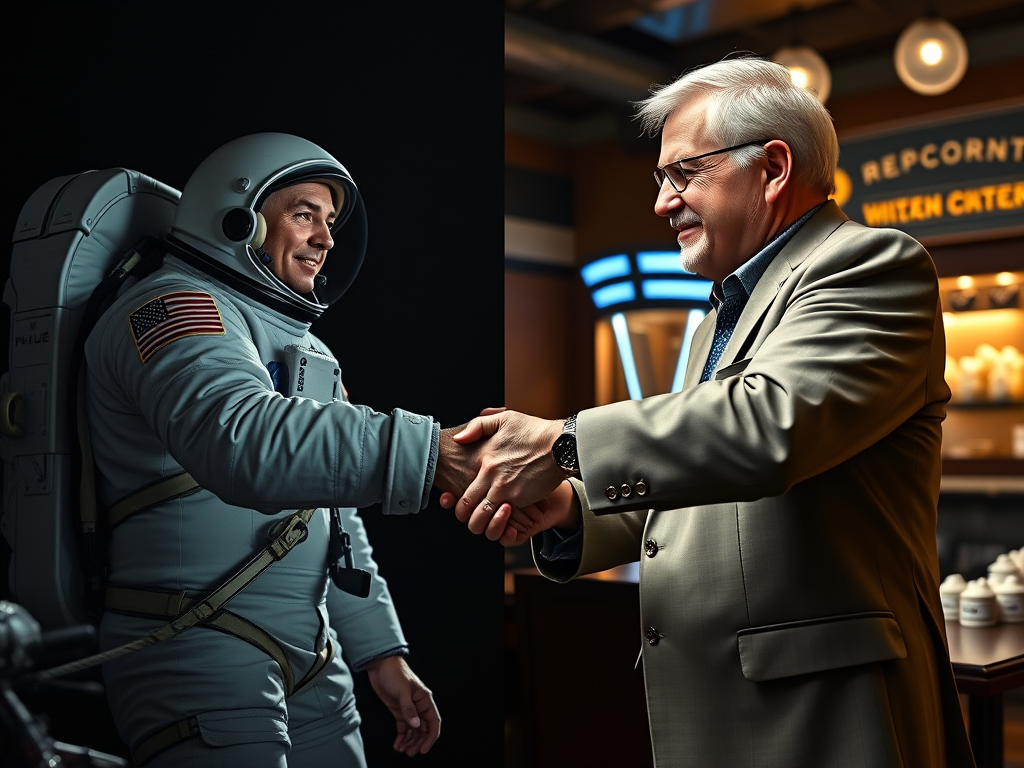
    Imagine the handshake between Armstrong and Buzz Aldrin inside the Lunar Module after successfully landing the Eagle.

    Psychology of the Zero-Gravity Grip: This isn’t a competitive “Alpha” squeeze. This is the Survival Synchronization Shake. When you are 238,900 miles away from Earth, encased in tinfoil and 1960s computer code, your handshake is a pure affirmation of mutual trust. It says, “We didn’t explode, we landed, and I trust you to help me get back to my cassette tapes.”

    Your Takeaway: You probably aren’t navigating a lunar landing, but you might be launching a high-stakes startup or closing a terrifying merger. In high-stress situations, drop the performative “pizzazz.” Offer a firm, grounding handshake that communicates absolute solidarity. Be the Neil Armstrong of your quarterly review.

    Bow Ties, Butter, and Blockbuster Nights: The Orville Deal

    Before we were fighting over the last copy of GoldenEye 007 at Blockbuster, we were throwing a bag of microwave popcorn into the cart. And for that, you can thank Purdue alumnus Orville Redenbacher (Class of ’28). Orville spent years crossbreeding corn to create the perfect, fluffy kernel, eventually launching his massive empire.

    Legend has it that Orville sealed his earliest distribution deals with a simple, Midwestern handshake.

    Psychology of the Popcorn Pitch: Orville’s persona—the signature bow tie, the thick glasses, the grandfatherly smile—was the ultimate disarming tactic. His handshake would have been the Midwestern Trust Grasp. It’s warm, encompasses the whole hand, and is backed by a product he believed in with his entire soul. It says, “I am a wholesome agricultural scientist, and my corn will blow your mind.”

    A crucial networking note: While Orville sold butter, his handshake was strictly grease-free. Sweaty or slippery palms are the ultimate social faux pas.

    Your Takeaway: Authenticity sells. You don’t need a slick, Wall Street “power grip” if your product and your passion are genuine. Dress the part (maybe skip the bow tie unless you can really pull it off like Bill Nye), make genuine eye contact, and let the quality of your work back up the firmness of your grip.

    Big Dog Energy at the ’94 Draft: Basketball Royalty

    Let’s fast-forward to the mid-90s. Purdue basketball under legendary coach Gene Keady (and his equally legendary, gravity-defying comb-over) was a powerhouse. But the absolute peak of 90s Boilermaker swagger was Glenn “Big Dog” Robinson.

    In 1994, after a monstrous career at Purdue, Big Dog went #1 overall in the NBA Draft. When his name was called, he walked across the stage and shook the hand of NBA Commissioner David Stern.

    Psychology of the Draft Day Dap: This is the Generational Shift Grip. Stern, representing the corporate establishment, offered the traditional standard pump. Robinson, stepping into his multi-million dollar destiny, met it with the undeniable, cool confidence of a 90s superstar. It wasn’t disrespectful, but it wasn’t overly deferential, either. It was the handshake of a man who knew he was about to get a massive Reebok shoe deal.

    Your Takeaway: When you are stepping up to the big leagues—whether it’s a massive promotion, a new job, or signing a major client—own your worth. Meet the establishment’s handshake with your own flavor of quiet, unshakeable confidence. You earned your spot on the stage; make sure your grip reflects it.

    Hammering Home the Boilermaker Bond

    Whether you are walking on the lunar surface, engineering the perfect movie snack, or dominating the paint in Mackey Arena, the underlying truth is the same: the most impactful moments in history are sealed with a handshake.

    Purdue’s legacy teaches us that a great grip requires the precision of an engineer, the authenticity of a farmer, and the undeniable swagger of a 90s power forward. Boiler up, and shake on!


  • Slap, Snap, & Hiss: Decoding the ‘Fresh Prince & Jazz’ Handshake

    Slap, Snap, & Hiss: Decoding the ‘Fresh Prince & Jazz’ Handshake

    It’s 1991. You’re watching The Fresh Prince of Bel-Air. The front door of the Banks mansion opens, and in walks Jazz, Will Smith’s best friend. Before a word is even spoken, it happens. The greeting. The ritual. The cultural phenomenon.

    It wasn’t just a handshake. It was a symphony of movement, a silent dance of friendship that defined a generation. If you were a kid in the 90s, you spent at least one recess trying to perfectly replicate the complex slap-slide-snap-hiss combo that Will and Jazz performed with such effortless cool.

    Today, we’re stepping out of the stuffy boardroom and onto the Banks’ marble foyer to analyze one of the most iconic real-life (well, TV-life) handshakes in history. Because that greeting was more than just a way to say hello—it was a masterclass in non-verbal communication, exclusive rapport, and understanding the power of rhythm in human connection.

    Rhythm Nation: Why the Flow Mattered

    The Will and Jazz handshake wasn’t about strength or dominance. There was no bone-crushing here. It was entirely about rhythm and flow.

    • The Slap: It started with an open-palm slap. A sharp, percussive “hello” that cut through the formal air of the mansion.
    • The Slide: Their hands would then slide against each other, a smooth transition that demonstrated perfect synchronization.
    • The Snap/Hiss: It often culminated in a snap, sometimes accompanied by a “Psssshhh” or “Hsssss” sound effect. This was the punctuation mark, the final flourish that said, “Yeah, we just did that.”

    In a business context, “rhythm” is often overlooked. We focus on firmness, eye contact, and duration. But if your handshake is jerky, hesitant, or out of sync with the other person’s, it creates subconscious friction. The Will & Jazz shake teaches us that synchronicity is more important than strength. When you meet someone, try to match their energy. If they’re offering a quick, light shake, don’t give them a slow, heavy squeeze. Find the flow. Be the Jazz to their Fresh Prince.

    Insider Access: The Handshake as a Velvet Rope

    Part of what made this handshake so captivating was its exclusivity. It was a secret code. You couldn’t just walk up and do it with Uncle Phil. It was reserved for the inner circle. It was a non-verbal way of saying, “We understand each other on a level that these rich, uptight people never will.”

    It created an instant “us vs. them” dynamic (the cool kids vs. the Banks establishment) and fostered a deep sense of belonging.

    In professional networking, we crave this level of rapport. We want to feel like an “insider” with a key client or collaborator. While you probably shouldn’t perform a four-step handshake with your CEO, you can achieve a similar effect through subtle, shared non-verbal cues. A knowing nod, a slight change in posture, or a shared laugh that feels exclusive can create that velvet rope effect, making the other person feel like they’re part of your “crew,” even without the high-top fade.

    Pops’ Disapproval: When Cool Clashes with Tradition

    Of course, for every Will and Jazz, there was a disapproving Uncle Phil. He’d watch their elaborate greeting with a scowl, a visual representation of tradition clashing with the new, “fresh” way of doing things. He just wanted a simple, firm handshake, and he was often left sighing in exasperation.

    This dynamic plays out in every modern workplace. There’s the “old guard” who prefers the traditional, stiff, two-pump handshake, and the new generation who might be more comfortable with a fist bump, a dap, or a more relaxed greeting.

    The lesson here is adaptability. Will was smart; he knew when to use the complex shake with Jazz and when to give Uncle Phil the traditional greeting he expected. You must be able to read the room. Don’t force a “dap” on a traditionalist, but don’t be afraid to let your guard down and use a warmer, more relaxed greeting with a peer you’ve built rapport with. Be like Will: able to navigate both the streets of West Philly and the mansions of Bel-Air with equal social grace.

    Conclusion: It’s All About the Hiss

    The Fresh Prince & Jazz handshake was more than just a cool move; it was a statement. It was about connection, rhythm, and finding your people in a world that sometimes feels a little too stiff.

    So, the next time you extend your hand, remember the lessons from Bel-Air. Focus on the flow, build that insider rapport, and most importantly, know when to keep it traditional and when to let your inner Fresh Prince shine. Just try to avoid getting thrown out of the front door like Jazz. Psssshhh!

  • The “Friends” Handshake: Decoding Joey & Chandler’s Bromance Grip (and What It Means for You!)

    The “Friends” Handshake: Decoding Joey & Chandler’s Bromance Grip (and What It Means for You!)

    Alright, pivot, pivot, PIVOT! Today, we’re not just analyzing handshakes; we’re dissecting the very fabric of 90s friendship, specifically through the lens of everyone’s favorite Central Perk regulars: Joey Tribbiani and Chandler Muriel Bing. Their bromance wasn’t just about sharing an apartment, a giant white dog, and a pathological fear of commitment; it was sealed with an intricate, evolving, and often hilarious series of handshakes and non-verbal cues.

    So, grab your oversized coffee mugs, plop down on the orange couch, and let’s uncover what Joey and Chandler’s iconic greeting rituals teach us about establishing rapport, navigating male friendships, and maybe, just maybe, how to snag a free sandwich.

    The “How You Doin’?” Handshake: Effortless Charm and Instant Rapport

    Joey Tribbiani’s signature line, “How you doin’?”, wasn’t just a verbal opener; it often heralded a handshake that perfectly encapsulated his persona. It was warm, confident, and disarmingly friendly, usually accompanied by that famous eyebrow wiggle and a knowing smile. His grip was probably firm but not aggressive, just enough to convey, “Hey, I’m Joey, and I’m probably gonna make you laugh (and maybe hit on your friend).”

    The Chandler Counterpart: Chandler’s handshake, especially early on, would have been a touch more nervous, maybe a slight squeeze of reassurance from Joey as if to say, “It’s okay, man, I’ve got your back (and your sarcastic quips).”

    What it Teaches Us:

    • Authenticity Wins: Joey’s handshake was an extension of his genuine, if sometimes simple, personality. It immediately set a tone of warmth and openness.
    • Reassurance is Key: For someone like Chandler, prone to anxiety, Joey’s steady grip was a non-verbal affirmation of their bond. In networking, a reassuring handshake can calm nerves and build instant trust.

    The “Gum? Gum would be perfection!” Combo: The Escalation of Friendship

    As Joey and Chandler’s friendship deepened, their greetings evolved beyond a simple handshake. This is crucial for understanding long-term rapport. They moved into high-fives, chest bumps (sometimes awkward), and those fantastic, overly elaborate secret handshakes that only make sense if you’ve shared a recliner for a decade.

    Think about the iconic moments: The synchronized arm wrestling. The joint celebrations after a successful “Die Hard” marathon. These aren’t just greetings; they’re affirmations of shared history and mutual understanding. The handshake becomes part of a larger, more intricate “combo move” of friendship.

    The Psychology of the Escalation:

    • Increased Intimacy: Moving from a formal handshake to more varied physical contact (high-fives, playful shoves, even hugs) signifies a deepening of the relationship. It’s a non-verbal way of saying, “We’ve moved beyond mere acquaintances.”
    • Shared Identity: Those secret handshakes? They’re powerful tribal markers. They say, “We’re an ‘us,’ and you’re an ‘them’ (unless you learn the secret code, which you won’t).” This fosters a strong sense of belonging and exclusivity.
    • Comfort and Trust: The ability to engage in playful physical contact without awkwardness is a huge indicator of trust and comfort in a relationship.

    Your Takeaway: In long-term business relationships or team environments, don’t be afraid to let your greetings evolve. A respectful high-five after a project success, or a genuine pat on the back, can solidify rapport beyond the initial handshake. Just know your audience – not every client wants a “pivot!” chest bump.

    The “Seven! Seven! Seven!” Problem: Miscommunication in the Man-Shake

    Even Joey and Chandler, with their unbreakable bond, had their moments of physical miscommunication. Remember the infamous “Seven” gesture? What’s obvious to one isn’t always obvious to the other, leading to comical but relatable awkwardness. This applies directly to handshakes and non-verbal cues in the real world.

    Common Miscommunication Zones:

    • Grip Strength: One person goes firm, the other goes limp. Instant mismatch.
    • Duration: One holds too long, the other pulls away too quickly.
    • The “Pull-In”: One person yanks the other closer, creating a “whoa there, buddy” moment.
    • The “Secret Combo” Fail: When one person attempts a more elaborate greeting (high-five, fist bump, secret handshake) and the other is expecting a simple handshake. It’s like trying to sing “Smelly Cat” and someone else jumps in with “Wonderwall.”

    The Psychology of the Miscommunication: It breaks the rhythm of social interaction, causing a brief moment of cognitive dissonance and sometimes awkwardness. It can make one or both parties feel slightly uncomfortable or misunderstood.

    Your Takeaway: Observe and adapt. Be present enough to read the other person’s cues. If you’re going for something beyond a standard handshake, make sure the other person looks receptive. When in doubt, default to the universally understood firm-but-friendly standard. And if a miscommunication happens, just laugh it off, like Chandler’s quick wit diffusing a tense situation.

    The “Could I BE Any Closer?” Boundary Push: Respecting Personal Space

    While Joey and Chandler were practically glued at the hip, they still had their boundaries (mostly). The handshake, especially in a professional setting, involves respecting personal space. A handshake that pulls you too close, or lingers uncomfortably, can break rapport rather than build it.

    The Joey/Chandler Lesson: Even in a close friendship, there’s an unspoken respect for personal bubbles. Joey knew when to hit on someone’s date, and when to back off (usually).

    Your Takeaway: A handshake should bring you together physically for a moment, but not invade personal space. Maintain a comfortable arm’s length, engage for 2-3 seconds, and then release. It’s a greeting, not a wrestling match (unless that’s your secret friendship combo, in which case, you do you).

    Conclusion: “Pivot!” Towards Better Handshakes

    The bromance between Joey and Chandler was a masterclass in evolving male friendship, built on humor, shared experiences, and a surprisingly insightful array of non-verbal cues. Their handshakes, from the initial “How you doin’?” to the elaborate combo moves, reflect the journey of rapport and trust.

    So, next time you extend your hand, think about Joey’s effortless charm, Chandler’s underlying warmth, and their combined ability to navigate awkwardness with a laugh. Make your handshake an affirmation of connection, a subtle nod to shared humanity, and maybe, just maybe, the start of your own iconic professional bromance (or womance, or just good ol’ productive work alliance). Now, could I be any clearer?

  • The “Talk to the Hand” Shake: A Saved by the Bell Analysis of Rejection

    The “Talk to the Hand” Shake: A Saved by the Bell Analysis of Rejection

    Let’s be real for a second. The 90s weren’t just about frosted tips, pogs, and checking your Tamagotchi between classes. It was a golden era of non-verbal communication. We didn’t just say “no.” We said, “Talk to the hand, ‘cause the face ain’t listening.”

    But what happens when that dismissal bleeds into professional networking? Today, we are dissecting the “Zack Morris Timeout” of handshakes: The aggressive rejection, the limp-wristed dismissal, and how to recover your dignity when someone leaves you hanging like a high-five on The Real World.

    The “As If!” Recoil

    We’ve all been there. You go in for the grip, confident as Cher Horowitz in a yellow plaid blazer, and the other person gives you the physical equivalent of “Ugh, as if!”

    They offer you the tips of their fingers. Just the tips. It’s the handshake equivalent of a dial-up modem screeching when you’re trying to use the phone. It says, “I am physically here, but spiritually, I am at Blockbuster renting Biodome.”

    The Psychology: In the 90s, this was the “whatever” of greetings. In 2026, it’s a power move. It screams that they think they’re the Fresh Prince and you’re just… Jazz, getting thrown out the front door.

    The Fix: Don’t crumble. Channel your inner Buffer. “Let’s get ready to crumble” isn’t the vibe. Instead, commit. Squeeze the fingertips firmly (not crushing, we aren’t trying to break a Game Boy) and shake it like you mean it. Force them to acknowledge the awkwardness. Make them the Screech in this scenario.

    The “Show Me the Money” Aggressor

    On the flip side, you have the Jerry Maguire. They don’t just shake your hand; they grasp it with the desperation of someone trying to keep a Furby from waking up in the middle of the night. They pull you in close, invading your personal bubble like a pop-up ad on a Geocities site.

    The Psychology: They are trying too hard. They read a book on “Alpha Moves” written by someone who definitely owned a pager. They think this handshake completes them.

    The Fix: Pivot. Literally. Step to the side as they pull, using their own momentum against them like a judo throw in Mortal Kombat. “Finish Him!” (Socially, of course).

    The “Secret Handshake” Delusion

    Remember when you and your best friend spent three weeks perfecting a handshake that involved four slaps, a spin, and a snap? (Usually inspired by The Fresh Prince of Bel-Air).

    Sometimes, you meet a client who thinks they have this level of rapport with you immediately. They go for the “bro-hug-snap-pull.” You go for the “professional grip.” The result is a tangled mess of fingers that looks like you’re trying to untie a knot in a yo-yo string.

    The Fix: Freeze. Reset. Smile like you just won the Aggro Crag on Global Guts. Say, “Whoops, let’s try that again without the secret code,” and offer a standard, firm hand. It’s disarming, it’s funny, and it saves you from looking like you’re fumbling a hacky sack.

    Conclusion: Be Kind, Rewind

    Business etiquette doesn’t have to be as stiff as a cardboard cutout of N-SYNC. But it shouldn’t be a tragedy either. Whether you’re facing a Limp Bizkit grip or a Spice Girl power-shake, remember the golden rule of the 90s: Be excellent to each other.

    And if all else fails? Just throw up a peace sign and walk away.

  • The Handshake’s Subtle Sexism: Unpacking Gender Dynamics in a Simple Greeting

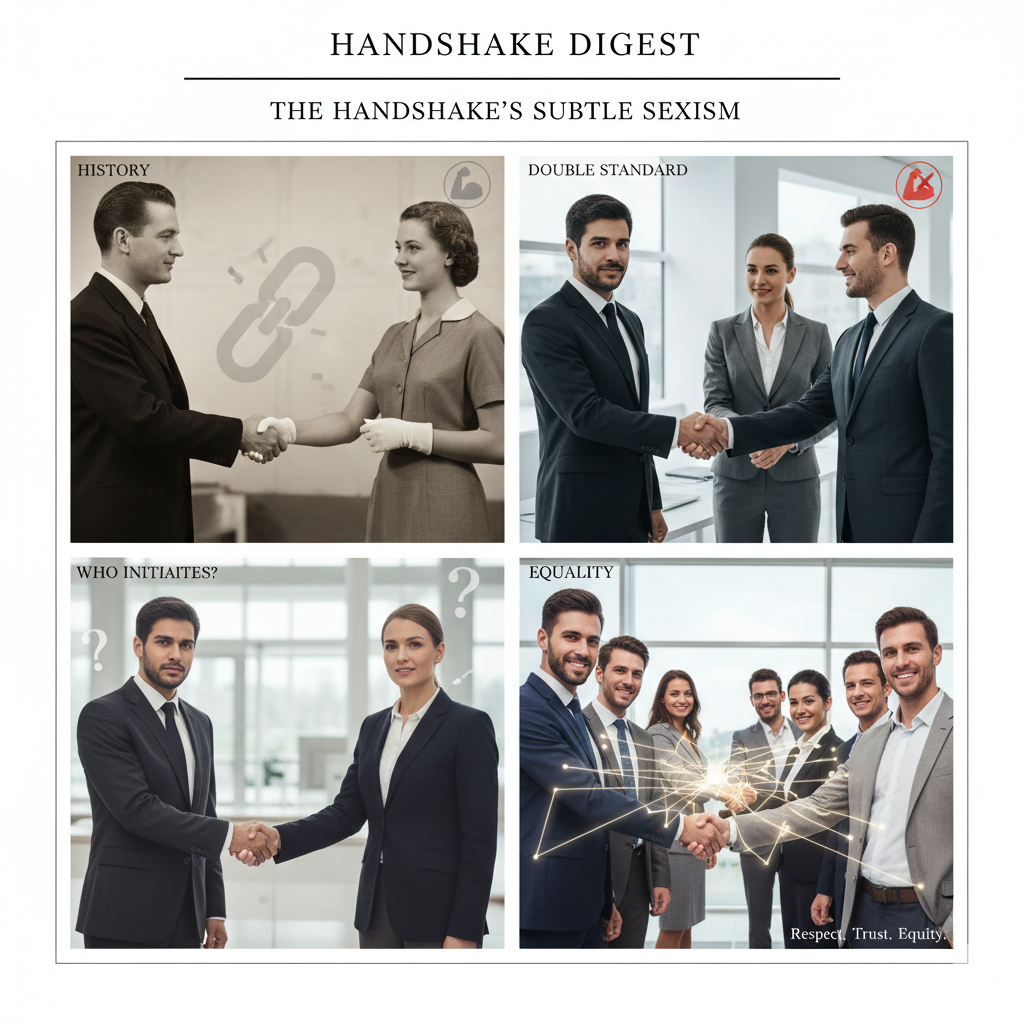
    The Handshake’s Subtle Sexism: Unpacking Gender Dynamics in a Simple Greeting

    For centuries, the handshake has been a powerful social and professional gesture, a non-verbal contract sealing everything from business deals to casual acquaintanceships. Yet, despite its seemingly neutral mechanics, the handshake is far from immune to the subtle—and sometimes not so subtle—influences of gender dynamics. From expectations around grip strength to who initiates the contact, gender can, and often does, play a significant role in how handshakes are perceived and performed.

    This isn’t about blaming individuals, but rather understanding ingrained societal biases and historical norms that continue to shape even the simplest of interactions. Unpacking the “handshake’s subtle sexism” means recognizing these dynamics and advocating for an equitable greeting experience for everyone.

    The “Lady’s Handshake”: A Relic of the Past?

    Historically, women were often offered a much lighter, almost delicate handshake, sometimes referred to as a “lady’s handshake.” This stemmed from outdated notions of female fragility and a desire to avoid appearing overly aggressive or unladylike. Men were implicitly (and sometimes explicitly) taught to adjust their grip when shaking a woman’s hand, often resulting in a less firm, almost dismissive interaction for the woman.

    What this communicates (unintentionally or intentionally):

    • Patronization: It can feel condescending, implying a woman is not capable of or deserving of a “real” handshake.
    • Weakness: It subtly reinforces stereotypes of female weakness or lack of assertiveness.
    • Disrespect: In a professional context, a noticeably weaker handshake can undermine a woman’s credibility or signal a lack of seriousness from the other party.

    While thankfully less prevalent today, the echoes of the “lady’s handshake” can still be felt. Women might still occasionally receive a weaker grip from men, or, conversely, feel pressured to overcompensate with an overly firm grip to avoid being seen as weak.

    The Double Standard of Grip Strength

    One of the most persistent gendered aspects of handshakes is the expectation surrounding grip strength.

    • For Men: A firm, confident handshake is almost universally expected and celebrated. It signals strength, confidence, and professionalism. A weak handshake from a man is often quickly judged negatively.
    • For Women: The expectation is more ambiguous. While a firm handshake is increasingly seen as professional and empowering for women, there is sometimes a narrower margin for error. An overly firm handshake from a woman might still, by some, be misconstrued as aggressive or unfeminine, whereas the same grip from a man would simply be seen as strong. Conversely, a weak handshake from a woman might be dismissed more readily than from a man.

    This double standard puts women in a tricky position: aiming for the “just right” firmness that conveys competence without crossing an invisible line into perceived aggression. This can add an unnecessary layer of self-consciousness to an otherwise simple gesture.

    Who Initiates? The Lingering Question of Protocol

    Historically, social etiquette often dictated that men should wait for women to extend their hand first. This was rooted in chivalry but also in a framework where women’s agency in social interactions was more circumscribed.

    While modern professional etiquette largely dictates that whoever initiates the greeting (regardless of gender) can initiate the handshake, some lingering uncertainty persists, particularly in more traditional or formal settings.

    • For Men: There can be a slight hesitation when greeting a woman, a subconscious pause to avoid appearing overly forward or disrespectful if she prefers not to shake hands.
    • For Women: There might be moments where extending a hand proactively feels like a bolder move than it should, or a subtle expectation that men should offer first still exists from some.

    In professional environments, this dynamic can lead to missed opportunities for immediate connection or contribute to an awkward start if both parties are waiting for the other to make the first move.

    The Impact on Professional Perception

    The cumulative effect of these gender dynamics is not trivial. In professional settings, where first impressions are critical:

    • Women can be subtly disadvantaged if their handshake is perceived as too weak (reinforcing stereotypes) or too strong (violating unspoken norms).
    • Men might unintentionally undermine a woman’s authority by offering a lighter grip or hesitating to initiate.

    These subtle signals contribute to the overall perception of competence, confidence, and leadership, which can have real-world implications for career advancement, negotiation outcomes, and professional relationships.

    Towards Equitable Handshakes: Best Practices for Everyone

    Achieving gender-neutral handshake etiquette isn’t about ignoring gender, but rather transcending outdated norms to create an equitable and respectful experience for all.

    1. Acknowledge and Challenge Biases: Be aware of your own potential subconscious biases. Are you subconsciously adjusting your grip based on gender? If so, challenge that instinct.
    2. Aim for Consistency: The “ideal” handshake—firm, full-hand grip, direct eye contact (where culturally appropriate), and a genuine smile—should be the standard for everyone, regardless of gender.
    3. Initiate Confidently (When Appropriate): Whether you are a man or a woman, if you are initiating a professional greeting, feel confident in extending your hand. The person who is initiating the introduction is generally the one to offer the handshake.
    4. Focus on Connection, Not Gender: Shift your mindset from “shaking a man’s hand” or “shaking a woman’s hand” to “shaking a person’s hand.” The goal is mutual respect and connection.
    5. Observe and Adapt to the Individual: While general guidelines are helpful, ultimately, you are interacting with an individual. Be sensitive to their cues and adjust if necessary, but don’t let gender be the primary determinant of your approach.

    The handshake, in its purest form, is a powerful symbol of equality and mutual respect. By actively challenging historical gender biases and embracing a consistent, confident approach, we can help ensure that this foundational greeting truly reflects the modern values of professionalism and fairness for all. The goal is simple: for every handshake to be a genuine moment of connection, free from the subtle constraints of outdated gender expectations.

  • Handshakes on the Global Stage: A Diplomat’s Guide to Cultural Sensitivity

    Handshakes on the Global Stage: A Diplomat’s Guide to Cultural Sensitivity

    In the intricate world of international diplomacy, business, and travel, a handshake is rarely just a handshake. It is a nuanced dance of cultural expectations, historical context, and personal interpretation that can either build bridges or inadvertently create barriers. For diplomats, international business professionals, and even curious travelers, understanding the subtle yet significant variations in handshake etiquette across the globe is not just a matter of politeness—it’s a critical component of successful cross-cultural communication and relationship building.

    The seemingly universal gesture of two hands clasping is, in reality, a kaleidoscope of meanings, pressures, durations, and accompanying non-verbal cues. Misinterpreting these can lead to awkwardness, miscommunication, or even unintentional offense, proving that what is firm and friendly in one culture might be seen as aggressive or disrespectful in another.

    The Western Standard: Firmness, Eye Contact, and Brevity

    In much of North America, Western Europe, and Australia, the prevailing standard for a business or formal handshake is a firm grip, direct eye contact, and a relatively brief duration (2-3 seconds). This combination is typically interpreted as a sign of confidence, sincerity, and professionalism. A weak or “limp fish” handshake is generally frowned upon, suggesting disinterest or insecurity, while an overly aggressive “bone crusher” can be seen as an attempt at dominance.

    However, even within the West, variations exist. Southern European cultures, for instance, might have slightly warmer and more prolonged handshakes than their Northern European counterparts, sometimes accompanied by a closer personal proximity.

    Asia: A Spectrum from Bows to Gentle Touches

    Asia presents a rich tapestry of greeting customs, where the handshake’s role can vary dramatically:

    • Japan: The traditional bow remains the primary form of greeting, signifying respect and humility. If a handshake is offered, it’s typically gentle, less firm, and often avoided with direct, sustained eye contact, which can be perceived as aggressive. A deep bow is reserved for those of higher status.
    • China: Handshakes are common in business settings, but they are generally less firm and held for a slightly longer duration than in the West. It’s polite to offer a gentle, two-handed shake to show respect to elders or superiors. Avoid direct eye contact if shaking hands with someone significantly older or higher in status.
    • India: The “Namaste” (palms pressed together, fingers pointing upwards, often accompanied by a slight bow) is a traditional and highly respected greeting, especially in formal settings or when greeting women. Handshakes between men are common and can be gentle, but direct physical contact between men and women in public or formal settings may be avoided due to cultural norms around gender segregation.
    • Southeast Asia (e.g., Thailand, Malaysia): The “Wai” (Thailand) or “Salam” (Malaysia/Indonesia) – a pressing together of the palms, often with a slight bow – is the customary greeting. If a handshake is offered, it’s typically soft and gentle. In some Muslim-majority countries, it is customary for men to shake hands with men and women with women, but direct handshakes between genders may be avoided or only offered by the woman.

    The Middle East and North Africa: Warmth, Respect, and the Right Hand

    In many Middle Eastern and North African cultures, handshakes are generally gentler and often held for a longer duration, sometimes even throughout the initial part of a conversation, to convey warmth and sincerity.

    • The Right Hand: It is paramount to always use your right hand for a handshake, as the left hand is traditionally considered unclean.
    • Gender: Handshakes between men are standard. However, a man should generally wait for a woman to extend her hand first. If she does not, a nod or verbal greeting is appropriate. Similarly, a woman might offer her hand to a man, but the initiative often rests with her in initial encounters.
    • Elders/Superiors: When greeting an elder or a person of higher status, a slightly prolonged, gentle handshake, sometimes accompanied by placing the left hand over the heart, can show immense respect.

    Latin America: Warmth, Close Proximity, and the Embrace

    Handshakes in Latin American countries are typically warmer and often more prolonged than in the West. They are frequently accompanied by:

    • Closer Personal Proximity: People tend to stand closer during greetings.
    • An Arm or Shoulder Touch: A pat on the shoulder or a grasp of the arm (especially between men) is common, adding a layer of personal warmth.
    • A “Doble Beso” or Cheek Kiss: Among women, and between men and women who know each other, a light cheek kiss (often one on each side, though customs vary by country) is a very common social greeting, even in business settings once a rapport is established.

    Sub-Saharan Africa: Respect and Traditional Variations

    African handshake customs are incredibly diverse, reflecting the continent’s vast array of cultures.

    • Respect for Elders: Many African cultures place a strong emphasis on showing respect to elders. This might involve a softer, prolonged handshake, or even supporting your right wrist with your left hand when shaking an elder’s hand as a sign of deference.
    • Two-Handed Shakes: In some regions, a two-handed handshake is a sign of deep respect and warmth.
    • Varying Durations: Handshakes can range from brief to quite prolonged, sometimes held for the entire initial conversation.

    The Diplomat’s Golden Rules for Global Handshakes:

    1. Observe First: When in doubt, watch how locals greet each each other.
    2. Be Prepared to Adapt: Flexibility is key. Don’t insist on your own cultural norm.
    3. Initiate with Caution: If unsure, allow the other person to initiate the handshake.
    4. Mirror (Respectfully): Try to subtly match the pressure, duration, and accompanying gestures (like a slight bow or a hand-over-heart gesture) if you are comfortable.
    5. Use Your Right Hand: When shaking hands, always use your right hand unless you have a visible disability.
    6. Prioritize Sincerity: Regardless of the specific custom, a genuine smile, appropriate eye contact (or respectful avoidance), and a warm demeanor will go a long way.
    7. Don’t Overthink It (But Do Think About It): While cultural sensitivity is crucial, don’t let anxiety paralyze you. If you make an honest mistake, a sincere apology (if needed) and a willingness to learn are usually well-received.

    In an increasingly interconnected world, the handshake remains a potent symbol of global interaction. By approaching it with an open mind, an observant eye, and a deep respect for cultural differences, professionals can transform a simple greeting into a powerful tool for fostering understanding, building trust, and achieving diplomatic and business success across borders.

  • The Psychology of the Post-Pandemic Handshake: Navigating the New Normal

    The Psychology of the Post-Pandemic Handshake: Navigating the New Normal

    The COVID-19 pandemic dramatically altered social norms, and few gestures were impacted as profoundly as the handshake. For centuries, it was the default greeting, a symbol of trust, peace, and connection. Then, almost overnight, it became a potential vector for disease, replaced by elbow bumps, fist bumps, nods, or even awkward waves. As we navigate the post-pandemic world, the handshake is making a tentative comeback, but not without a new layer of psychological complexity. Understanding this “new normal” for handshakes is crucial for effective communication and social grace.

    The Great Handshake Hiatus: A Psychological Shift

    For nearly two years, many parts of the world largely abandoned the handshake. This wasn’t just a physical change; it was a profound psychological shift. Humans are wired for touch, and the absence of this basic form of physical connection left a void. Initially, there was a collective sense of caution and a shared understanding that avoiding handshakes was a sign of respect for public health.

    However, as the pandemic receded and vaccinations became widespread, the return to touch began to feel less clear-cut. Some people eagerly re-embraced the handshake, yearning for that familiar sense of connection. Others remained hesitant, their ingrained caution a lasting legacy of the pandemic. This dichotomy has created a subtle tension, making the decision to offer or accept a handshake a more conscious and often anxiety-inducing act than ever before.

    The New Handshake Dilemma: To Shake or Not to Shake?

    Today, encountering someone new or reconnecting with an acquaintance often presents an unspoken question: “Do we shake hands?” This dilemma is fueled by several factors:

    1. Varying Comfort Levels: Individuals have widely different comfort levels with physical contact. Some are eager for it, while others still prefer to maintain a greater personal space. These comfort levels are often influenced by personal health, the health of loved ones, recent travel, or simply individual personality traits.
    2. Lingering Health Anxiety: Despite the current health landscape, the subconscious fear of germ transmission can persist for many. The idea of direct physical contact, once innocuous, now carries a faint echo of risk for some.
    3. Ambiguity of Social Cues: Without a clear universal norm, deciphering social cues has become more challenging. Is an extended hand an invitation, or a test? Is a withdrawn hand a sign of disrespect, or a plea for understanding?
    4. Generational Differences: Younger generations, who spent formative years during the pandemic, may develop different norms around physical greetings compared to older generations who grew up with the handshake as an absolute standard.

    This ambiguity can lead to awkward moments: the hesitant half-reach, the aborted gesture, or the overly emphatic verbal apology for not shaking hands. These moments, though brief, can subtly impact first impressions and the flow of conversation.

    Navigating the Post-Pandemic Handshake with Grace

    Given this new psychological landscape, how can we approach handshakes in a way that is respectful, confident, and effective? It requires a blend of observation, empathy, and clear communication.

    1. Observe and Adapt: Read the Room (and the Person)

    Before extending your hand, take a moment to observe the other person’s body language.

    • Do they extend their hand first? If so, they are likely comfortable.
    • Do they maintain a greater distance? They might prefer a non-contact greeting.
    • Do they offer a verbal greeting with a nod or a smile, but no hand? Take the cue.

    If you are unsure, a slight pause or a subtle verbal cue can help. For example, “It’s wonderful to meet you,” while maintaining a friendly posture, allows the other person to initiate or signal their preference.

    2. Offer an Alternative (If You’re Uncomfortable)

    If you are not comfortable shaking hands, be prepared to offer a polite alternative. Honesty and warmth are key.

    • “It’s great to see you! I’m still trying to limit direct contact, but I’m thrilled to connect.” (Offer a warm smile and nod).
    • “Pleased to meet you. I’m going to opt for a wave today, but it’s genuinely good to make your acquaintance.” The goal is to communicate respect and enthusiasm for the interaction, even if you’re not offering a hand. Avoid making the other person feel guilty or judged for their comfort level.

    3. If You Offer, Commit to It

    If you decide to offer a handshake, do so with confidence. No hesitant “hover hand” or a weak, apologetic grip. A firm, confident handshake (assuming it’s accepted) signals that you are comfortable and engaged. This commitment minimizes awkwardness.

    4. Respect the Refusal

    If you offer a handshake and it’s politely declined (e.g., “Oh, I’m just doing elbow bumps these days!”), respect that immediately and gracefully. Do not press the issue or make the other person feel uncomfortable. A simple, “No problem at all!” and a friendly smile will suffice.

    5. Prioritize Connection Over Custom

    Ultimately, the purpose of any greeting is to establish a connection and show respect. While the handshake has historically been the primary vehicle for this, in the post-pandemic era, prioritizing the spirit of connection over strict adherence to custom is paramount. A warm smile, genuine eye contact, and an authentic verbal greeting can often convey just as much, if not more, warmth and respect than a forced or uncomfortable handshake.

    The handshake is evolving. It’s no longer an automatic gesture but a more considered one, reflecting individual comfort, health awareness, and cultural sensitivity. By approaching it with empathy, observation, and a willingness to adapt, we can ensure that our greetings continue to foster positive impressions and build strong connections in this new, ever-changing social landscape. The power of human connection endures, even if the method of expressing it occasionally shifts.

  • Beyond the Grip: The Power of the Handshake in Business Networking

    Beyond the Grip: The Power of the Handshake in Business Networking

    In today’s hyper-connected, digital world, where virtual meetings, emails, and LinkedIn messages often dominate our professional interactions, the humble handshake might seem like an outdated relic. Yet, in the realm of business networking, the handshake remains an exceptionally powerful and often underestimated tool. It’s the physical manifestation of trust, respect, and a willingness to engage, capable of forging immediate connections and leaving a lasting impression that no amount of digital communication can replicate.

    The Handshake as a Trust Accelerator

    Think about the sheer volume of information exchanged in a business networking event. You’re bombarded with names, titles, company pitches, and elevator speeches. What cuts through the noise? Often, it’s the genuine, human connection initiated by a firm, confident handshake.

    Psychologically, the handshake acts as a “trust accelerator.” In a study published in the Journal of Cognitive Neuroscience, researchers found that handshakes increase the release of oxytocin, a hormone linked to bonding and trust. This isn’t just a pleasant feeling; it means that the very act of shaking hands can make both parties more receptive to collaboration and more likely to trust each other’s intentions. In a networking scenario, where the goal is to quickly establish rapport and credibility, this is an invaluable asset.

    A good handshake immediately signals several positive traits:

    • Confidence: A firm grip suggests you are self-assured and comfortable in your skin.
    • Openness: Extending your hand signifies a willingness to engage and connect.
    • Respect: Offering a proper handshake shows you value the other person and the interaction.
    • Sincerity: Combined with eye contact and a smile, it authenticates your words and intentions.

    Navigating the Networking Minefield: Handshake Etiquette for Success

    While the core principles of a good handshake are universal, mastering it in a networking context requires a nuanced understanding of etiquette. It’s not just about avoiding the “limp fish” or “bone crusher” (as we’ve discussed before); it’s about timing, intention, and cultural awareness.

    1. The Proactive Handshake: Initiating Connection

    In networking, don’t wait to be offered a handshake. If you’re approaching someone, extend your hand first (where culturally appropriate). This demonstrates initiative, confidence, and a clear desire to connect. Make sure your approach is direct and your intention clear.

    2. The Right Grip: Firm but Respectful

    Aim for a firm, full-hand grip where the web of your thumb meets the web of their thumb. Apply moderate pressure – enough to convey confidence without being aggressive. Remember, the goal is mutual respect, not dominance.

    3. Eye Contact and Smile: The Non-Verbal Trifecta

    The handshake is rarely isolated. It’s part of a powerful non-verbal trifecta:

    • Eye Contact: Hold direct, friendly eye contact throughout the handshake. This conveys honesty and engagement.
    • Smile: A genuine smile makes you approachable and reinforces a positive, open attitude.
    • Verbal Greeting: Combine the handshake with a clear, concise verbal greeting like, “Hello, [Name], great to meet you,” or “Pleased to connect.”

    4. The Duration: Not Too Short, Not Too Long

    A typical business handshake should last about 2-3 seconds. Too brief can seem dismissive; too long can become awkward. It’s just enough time to establish connection without lingering.

    5. Be Mindful of Cultural Context

    As we’ve explored, handshake customs vary. If you’re at an international networking event, a quick observation of how others are greeting each other can be invaluable. When in doubt, a moderately firm Western-style handshake is often a safe bet, combined with a willingness to adapt if a different custom is presented (e.g., a lighter grip, a bow, or a nod). Always respect local customs.

    The Lasting Impression: Beyond the Event

    The power of the handshake extends far beyond the immediate moment of connection. It contributes significantly to the overall impression you leave:

    • Memorability: People are more likely to remember someone who made a strong physical and emotional connection. A good handshake can make you stand out from a sea of generic introductions.
    • Credibility: It reinforces your professional image. If your handshake is confident and genuine, it suggests that your character and professional abilities are equally so.
    • Relationship Building: The initial physical connection facilitated by a handshake lays the groundwork for deeper professional relationships. It makes follow-up conversations feel more natural and less transactional.

    Consider a scenario where you meet several potential clients at a conference. After exchanging cards and pleasantries, the person who offered a memorable, confident handshake, combined with genuine eye contact and a smile, is more likely to be the one whose card you prioritize and whose follow-up email you open first. The handshake creates a tangible anchor point for the digital communication that follows.

    The Handshake in a Digital Age

    Even with the rise of virtual communication, the importance of the in-person handshake in business networking remains paramount. When you do have the opportunity to meet in person, seize it as a chance to leverage this powerful tool. It adds a layer of human connection that screens and speakers simply cannot replicate.

    The handshake is a testament to the enduring power of human touch and non-verbal communication in a world that often prioritizes speed and digital efficiency. In the strategic landscape of business networking, it’s not just a polite gesture; it’s a vital component for building trust, establishing rapport, and ultimately, unlocking new opportunities. Master your handshake, and you’ll master a significant key to professional success.

  • The “Limp Fish” to the “Bone Crusher”: Deconstructing the Bad Handshake and How to Fix It

    The “Limp Fish” to the “Bone Crusher”: Deconstructing the Bad Handshake and How to Fix It

    The handshake. It’s a fundamental human greeting, a non-verbal contract, and often the very first impression we make. We’ve all experienced the good ones – firm, confident, and reassuring. But we’ve also endured the bad ones, those awkward encounters that leave a lingering sense of unease or even outright judgment. From the notoriously off-putting “limp fish” to the intimidating “bone crusher,” a poor handshake can unwittingly communicate disinterest, aggression, or a lack of confidence. Understanding these common missteps and knowing how to correct them is crucial for anyone looking to make a positive impact in social and professional settings.

    The Limp Fish: A Drowning Impression

    Perhaps the most universally loathed handshake is the “limp fish.” This is where the giver offers a hand devoid of tension, a soft, clammy, and unengaging grip that feels more like holding a lifeless object than connecting with another human being.

    What it communicates:

    • Disinterest: It suggests a lack of enthusiasm or a desire to avoid interaction.
    • Lack of Confidence: It can be interpreted as shyness, insecurity, or even submissiveness.
    • Weakness: In a business context, it might imply a lack of conviction or resolve.
    • Germ Aversion: Sometimes, it’s mistaken for a subtle attempt to minimize contact due to a fear of germs, which can feel insulting.

    Why it happens: Often, a limp fish handshake isn’t intentional. It might stem from shyness, social anxiety, or simply never having been taught the importance of a firm grip. Some individuals might also misinterpret “gentle” as “polite,” especially in cultures where overly firm grips are seen as aggressive.

    How to fix it: The remedy for a limp fish is straightforward: conscious effort and a slight increase in firmness.

    • Focus on the Web: When approaching for a handshake, aim to meet the web of your hand (the space between your thumb and forefinger) with the web of the other person’s hand. This ensures a full, proper grip.
    • Apply Gentle Pressure: Imagine you’re gently squeezing a ripe orange – firm enough to feel, but not so hard as to crush it. This provides a sense of connection without aggression.
    • Engage Your Hand: Don’t just offer your fingers; engage your entire hand and arm in the motion.

    The Bone Crusher: An Act of Unintended Aggression

    On the opposite end of the spectrum is the “bone crusher” or “vice grip.” This handshake is characterized by excessive force, often accompanied by a competitive squeeze that can genuinely cause discomfort or even pain.

    What it communicates:

    • Aggression/Dominance: It’s often perceived as an attempt to assert superiority or intimidate.
    • Lack of Awareness: The giver might be completely oblivious to the pain they’re inflicting, signaling a lack of empathy or social awareness.
    • Overcompensation: Sometimes, it’s an overcorrection for a previously weak handshake, or an attempt to appear “stronger” than one feels.

    Why it happens: Many bone crushers are well-intentioned but misguided. They might have been told to have a “firm handshake” and overdo it, or they might be genuinely unaware of their own strength. In some competitive environments, it can be a deliberate (though often counterproductive) power play.

    How to fix it: The key here is moderation and sensitivity.

    • Mirror the Pressure: When you shake hands, be aware of the pressure the other person is applying. Aim to match it, or be slightly firmer if their grip is too weak.
    • Focus on Connection, Not Strength: Remind yourself that the goal is to create a connection, not to demonstrate physical prowess.
    • Practice with Awareness: If you know you tend to be a bone crusher, consciously reduce your force and ask a trusted friend for feedback.

    The Sweaty Palm: An Unfortunate Reality

    While not a “type” of handshake in terms of grip, a sweaty palm can derail an otherwise perfect greeting. It’s often involuntary and can be a source of anxiety for the person experiencing it.

    What it communicates:

    • Nervousness: Often associated with anxiety or stress.
    • Discomfort: Can make the other person feel uncomfortable or even repulsed.

    How to manage it:

    • Subtle Wipe: Before an important meeting or greeting, discreetly wipe your palm on your pants or skirt.
    • Hand Sanitizer (with caution): Alcohol-based hand sanitizers can temporarily dry the skin, but use sparingly to avoid leaving a sticky residue.
    • Keep Hands Free: Avoid holding a cold drink that might condense and make your hands colder and wetter.

    The Hover Hand / Air Handshake: The Awkward Avoidance

    In the age of heightened germ awareness, some people attempt an “air handshake” or a “hover hand,” where they extend a hand but don’t quite make contact, or perform a very light, fleeting touch.

    What it communicates:

    • Germophobia: A clear signal of a desire to avoid physical contact.
    • Social Awkwardness: Can leave the other person feeling confused or rejected.
    • Lack of Sincerity: The absence of a real grip can make the greeting feel insincere.

    How to fix it: If you’re genuinely concerned about germs, it’s usually better to offer a clear alternative rather than an awkward half-handshake. A verbal “It’s wonderful to meet you, but I’m just getting over a cold, so I’ll offer you a nod instead!” is far more polite and less ambiguous than a hover. If no health concerns exist, commit to a proper handshake.

    The Importance of the Complete Package: Eye Contact and Verbal Greeting

    Remember, a handshake isn’t just about the grip. It’s part of a larger interaction:

    • Eye Contact: Direct, friendly eye contact is crucial. It conveys honesty, sincerity, and engagement. Avoid staring, but hold contact for the duration of the handshake.
    • Genuine Smile: A warm, authentic smile makes you approachable and reinforces a positive impression.
    • Verbal Greeting: A clear “Nice to meet you,” “Hello,” or “Good morning” completes the interaction and adds a layer of professionalism and warmth.

    Practice Makes Perfect

    Like any skill, mastering the handshake takes practice. Pay attention to how others shake hands, and consciously evaluate your own technique. Ask trusted friends or mentors for honest feedback. By avoiding the pitfalls of the limp fish and the bone crusher, and by focusing on a confident, respectful, and culturally appropriate grip, you can transform your handshake into a powerful tool for building connections and making memorable first impressions.

  • The Silent Language of Power: How Handshakes Shape Our Perceptions

    The Silent Language of Power: How Handshakes Shape Our Perceptions

    The handshake, a seemingly simple gesture, is far more than just a greeting. It’s a primal form of communication, a silent language steeped in history, psychology, and cultural nuances that can profoundly influence first impressions and the course of business interactions. From its ancient origins as a sign of peace to its modern-day role in sealing deals, the handshake remains a potent symbol of trust, respect, and even power.

    A Grip Through Time: The Ancient Roots of a Modern Ritual

    The handshake’s history stretches back millennia, far preceding written language. Its earliest known depictions can be found in ancient Egyptian reliefs, where gods and pharaohs exchange clasped hands. In ancient Greece, the handshake (or “dexiosis”) was a symbol of trust, hospitality, and even an oath. Soldiers would offer an open, empty hand to show they carried no weapons, transforming a potential threat into an offer of peace. This fundamental purpose – to signal non-aggression and create a bond – has endured throughout the ages.

    During the Roman Empire, the handshake evolved further, often involving a grasp of the forearm, possibly to check for hidden daggers in sleeves. This practical function gradually faded, but the underlying message of mutual vulnerability and goodwill persisted, laying the groundwork for the various forms of handshakes we see today.

    The Psychology of Connection: More Than Just Skin-on-Skin

    Beyond its historical significance, the handshake plays a crucial role in our psychological make-up. Research has consistently shown that a good handshake can significantly influence how others perceive us. A firm, confident handshake can convey competence, warmth, and trustworthiness, while a weak or overly aggressive grip can leave a lasting negative impression.

    Studies have even explored the neurological impact of a handshake. The physical contact releases oxytocin, a hormone associated with bonding and trust. This explains why a genuine handshake can instantly create a sense of connection, making people more receptive to what you have to say. It’s a non-verbal cue that activates our social circuits, paving the way for more meaningful interaction.

    Consider a job interview: the handshake is often the very first physical interaction. A study published in the Journal of Personality and Social Psychology found that interviewees who initiated a firm handshake were rated more favorably and were more likely to be hired. This wasn’t just about politeness; it was about the subconscious signals of confidence and engagement that the handshake conveyed.

    Cultural Variations: The Global Handshake Spectrum

    While the handshake is a universal gesture, its specific execution varies wildly across cultures. What is considered polite and professional in one country might be seen as disrespectful or even offensive in another.

    • The Western World: In most Western countries (North America, Europe, Australia), a firm, brief handshake with direct eye contact is standard in business and social settings. A “limp fish” handshake is generally frowned upon, as is a bone-crushing grip.
    • Japan: The Japanese bow is often preferred, but if a handshake is offered, it’s typically lighter and less firm than in the West. Prolonged eye contact during a handshake can be seen as aggressive.
    • Middle East: A gentle handshake, often held for a longer duration, is common. It’s usually considered impolite to offer a handshake with the left hand, as it’s traditionally considered unclean.
    • India: The “namaste” (palms pressed together, fingers pointing up) is a common greeting, especially in formal or initial encounters. Handshakes among men are common, but direct physical contact between men and women in public may be avoided.
    • Latin America: Handshakes tend to be warmer and can be accompanied by a pat on the back or shoulder, especially among men. The handshake might also be held for a slightly longer duration, reflecting a more personal connection.

    Understanding these cultural nuances is not just about avoiding offense; it’s about building rapport and demonstrating respect. A willingness to adapt your handshake to local customs shows a level of cultural intelligence that can be invaluable in international business and travel.

    The Art of the Business Handshake: Sealing the Deal

    In the business world, the handshake is a powerful tool for establishing credibility, building rapport, and even concluding agreements. It’s the physical embodiment of trust and commitment.

    A strong business handshake involves:

    1. Confidence, Not Aggression: A firm grip that mirrors the other person’s, without being overpowering.
    2. Web-to-Web Contact: Ensure the web of your thumb meets the web of their thumb. This ensures a full, secure grip.
    3. Eye Contact: Direct, friendly eye contact conveys honesty and engagement.
    4. A Genuine Smile: A warm smile reinforces the positive impression.
    5. Appropriate Duration: Generally 2-3 seconds, long enough to convey sincerity but not to become awkward.
    6. Verbal Greeting: Combine the handshake with a clear, concise verbal greeting like “Nice to meet you” or “Good to see you again.”

    The handshake can set the tone for an entire meeting. It can convey respect for a superior, build camaraderie with a colleague, or assure a client of your professionalism. In an increasingly digital world, where much of our communication happens virtually, the physical act of a handshake remains a tangible reminder of human connection and the power of a shared moment.

    From ancient battlefields to modern boardrooms, the handshake has endured as a silent, yet incredibly articulate, form of communication. It’s a testament to our fundamental human need for connection, trust, and mutual respect. Mastering this simple gesture is not just about etiquette; it’s about mastering a powerful tool for shaping perceptions, forging relationships, and navigating the complex tapestry of human interaction.