Blog

  • Handshakes in the Digital Age

    Are They Becoming Obsolete?

    In our increasingly interconnected yet physically distanced world, where virtual meetings and digital communication reign supreme, the once-ubiquitous handshake faces a fascinating crossroads. Has the rise of remote interactions relegated this tactile tradition to the realm of quaint formalities, slowly becoming obsolete in the face of digital efficiency? Or does its inherent human connection still hold a vital place in our evolving social and professional landscape?

    The impact of remote communication on the handshake is undeniable. With a significant portion of business, networking, and even social interactions now occurring through screens, the opportunity for a physical handshake has drastically diminished. Video conferencing platforms offer waves, nods, and verbal greetings, but lack the tangible connection of a clasped hand. For individuals who conduct the majority of their interactions remotely, the handshake might feel like an infrequent and perhaps even slightly awkward ritual when it does occur.

    The pandemic, in particular, accelerated the shift away from handshakes. Public health concerns led to widespread recommendations against physical contact, pushing alternative greetings like elbow bumps, foot taps, and simply verbal acknowledgments into the mainstream. While these alternatives served a practical purpose during a time of heightened health awareness, they often felt like temporary substitutes, lacking the established social weight and nuanced communication of a traditional handshake.

    However, to declare the handshake obsolete might be premature. Despite the dominance of digital communication, face-to-face interactions still hold significant value, particularly in building strong, lasting relationships. The handshake, in these in-person encounters, retains its power as a potent non-verbal cue. It provides an immediate, tangible connection that digital communication simply cannot replicate. The firmness of the grip, the duration, the accompanying eye contact – these subtle elements convey a wealth of information about confidence, sincerity, and approachability in a way that emojis and carefully crafted emails cannot.

    Consider the realm of high-stakes business deals or crucial networking events. While initial contact might occur online, sealing an agreement or forging a meaningful connection often involves a physical meeting. In these moments, the handshake remains a powerful symbol of trust, commitment, and mutual respect. It’s a tangible way to solidify a relationship that has been nurtured through digital channels.

    Furthermore, the handshake is deeply ingrained in our cultural fabric. It’s a tradition passed down through generations, carrying historical and social significance. To abandon it entirely would be to lose a piece of our collective non-verbal language. While the frequency of handshakes might decrease in a more digitally driven world, its symbolic importance in face-to-face interactions is likely to endure.

    The future of the handshake might lie in a hybrid approach. While remote communication will undoubtedly continue to play a significant role, in-person meetings will likely remain valuable for building deeper connections and fostering trust. In these situations, the handshake will likely persist as a key element of the initial greeting.

    Moreover, as we navigate the long-term impact of increased digital interaction, the value of genuine human connection might even be amplified. The handshake, as a simple yet powerful form of physical connection, could become even more meaningful in a world increasingly mediated by screens. It serves as a reminder of our shared physicality and the importance of direct human interaction.

    In conclusion, while the rise of remote communication has undoubtedly impacted the frequency of handshakes, it’s unlikely to render them entirely obsolete. The handshake remains a potent and culturally significant gesture in face-to-face interactions, conveying a level of connection and trust that digital communication struggles to replicate. As we navigate the evolving landscape of communication, the handshake may adapt and become more intentional, but its fundamental role in establishing initial rapport and solidifying relationships is likely to endure in the digital age.

  • Mastering the Art of the Professional Handshake

    Tips for Success

    In the competitive landscape of business and networking, every interaction counts. While your skills and qualifications are paramount, the initial moments of connection often hinge on something as seemingly simple as a handshake. Mastering the art of the professional handshake can leave a lasting positive impression, conveying confidence, trustworthiness, and genuine engagement. Here’s how to ensure your first grip sets you up for success.

    The Foundation: The Grip Itself. As discussed previously, the ideal professional handshake strikes a balance: firm but not crushing. Aim for a full palm-to-palm contact, ensuring your thumb web meets theirs. Apply a comfortable, confident pressure – think of it as a solid greeting, not a test of strength. Avoid the limp fish, which can signal a lack of confidence, and the bone-crusher, which can come across as aggressive or overbearing. Practice with a friend to find that middle ground that feels both assertive and welcoming.

    The Visual Connection: Eye Contact is Key. A strong handshake without accompanying eye contact loses much of its impact. When you extend your hand, make direct, yet not intense, eye contact with the person you are greeting. This demonstrates that you are present, engaged, and sincere in your interaction. Darting eyes or looking over their shoulder can convey disinterest or a lack of confidence. Maintain eye contact throughout the brief duration of the handshake.

    Posture and Approach: Project Confidence. Your handshake doesn’t exist in isolation. Your overall posture and approach contribute significantly to the impression you make. Stand tall with your shoulders relaxed and your body angled slightly towards the person. Approach with a genuine smile (when appropriate for the context) and an open demeanor. This non-verbal communication signals confidence and approachability, making your handshake feel more natural and welcoming.

    The Duration and Movement: Keep it Concise. A professional handshake is typically brief, lasting for a few pumps. Avoid lingering too long, which can feel awkward, or abruptly letting go, which can seem dismissive. A smooth, decisive grip and release conveys professionalism and respect for the other person’s time.

    Context Matters: Adapt Your Style. While the core principles remain consistent, be mindful of the context. A slightly firmer handshake might be appropriate in a formal business setting, while a slightly gentler approach might be suitable in a more casual networking event. Observe the other person’s handshake if you’re unsure. Mirroring their style (within the bounds of a confident grip) can show respect and build rapport.

    The Follow-Through: Verbal Reinforcement. A professional handshake is often accompanied by a verbal greeting. Clearly state your name and title (if applicable) while making eye contact during the shake. A simple “Nice to meet you,” or “It’s a pleasure to connect,” adds a personal touch and reinforces the positive impression.

    Be Mindful of Cultural Differences: In today’s globalized world, be aware that handshake norms can vary significantly across cultures. Researching basic greeting customs in different regions can prevent unintentional faux pas. In some cultures, a lighter touch or a bow might be customary instead of a firm handshake. Adaptability and a willingness to learn are crucial in international business settings.

    Practice and Feedback: Like any skill, mastering the professional handshake takes practice. Pay attention to the handshakes you receive and how they make you feel. Ask trusted colleagues or mentors for feedback on your own handshake. A simple, “How’s my handshake?” can provide valuable insights and help you refine your technique.

    In conclusion, the professional handshake is a powerful tool in your business and networking arsenal. By focusing on a firm but not crushing grip, maintaining eye contact, exhibiting confident posture, keeping the duration concise, and being mindful of context and cultural nuances, you can make a positive first impression that opens doors and fosters meaningful connections. Mastering this art is a small investment that can yield significant returns in your professional journey.

  • The Unexpected Handshake

    Navigating Awkward Encounters

    The handshake, for all its historical significance and psychological weight, isn’t always a smooth, seamless affair. In the messy reality of human interaction, the unexpected handshake rears its often-clammy, sometimes-missed, and occasionally downright bizarre head. Navigating these awkward encounters with grace and humor is a social skill in itself, turning potential cringe-worthy moments into opportunities for connection, or at least, a shared chuckle.

    One of the most common culprits in the unexpected handshake hall of fame is the dreaded sweaty palm. In a moment where you want to project confidence and composure, a damp handshake can leave you feeling self-conscious and the recipient slightly… moist. The culprit can be anything from pre-meeting jitters to an overly warm room. The key here is damage control. If you anticipate potential palm perspiration, a discreet wipe on your trousers or a nearby napkin beforehand can be a lifesaver. If you find yourself mid-shake with an unwelcome slickness, try to keep the contact brief but maintain a genuine smile and eye contact to compensate. A self-deprecating, lighthearted comment like, “Apologies, a bit nervous/warm in here!” can also diffuse the situation and make you appear more human and relatable. Avoid the urge to wipe your hand conspicuously immediately after, as this can amplify the awkwardness.

    Then there’s the missed grip, the ballet of outstretched hands that somehow fail to connect. This can happen due to misjudged distance, differing cultural norms regarding personal space, or simply a moment of mutual awkwardness. The best approach here is to laugh it off with good humor. A simple, “Oops, my bad!” or “Let’s try that again!” accompanied by a genuine smile can turn an awkward fumble into a lighthearted moment. Avoid over-analyzing or dwelling on the missed connection. Simply reset and try again with a bit more intention.

    Another unexpected handshake scenario involves the enthusiastic but misjudged grip. We’ve all encountered the person whose handshake feels like a vice grip designed to test the structural integrity of your knuckles. While a firm handshake is generally positive, this extreme can leave the recipient wincing and questioning your intentions. If you find yourself on the receiving end of such a grip, a brief, polite wince (if necessary!) and a steady release of your hand is the best course of action. If you’re the enthusiastic gripper, try to be mindful of the pressure you’re exerting. Paying attention to the other person’s reaction is crucial. A slight easing of pressure mid-shake can demonstrate awareness and consideration.

    Cultural differences can also lead to unexpected handshake encounters. In some cultures, a much gentler touch is the norm, and a firm Western-style handshake can be perceived as aggressive. Conversely, in some regions, a longer, more involved handshake with additional touches is customary, which might feel overly familiar to someone from a more reserved culture. The unexpectedness here lies in the clash of norms. The best way to navigate this is through observation and a willingness to adapt. When in unfamiliar cultural settings, pay attention to how locals greet each other and try to mirror their style. When in doubt, erring on the side of a gentler approach is often safer than being overly assertive.

    The unexpectedly prolonged handshake can also create an awkward pause. What starts as a standard greeting stretches into an uncomfortably long hand-holding session. This can leave both parties wondering when and how to disengage. If you find yourself in this situation, a subtle, gentle squeeze followed by a slight backward movement of your hand can signal the natural conclusion of the handshake. If you’re the one holding on a tad too long, be mindful of the other person’s body language. Any signs of discomfort or a shifting weight might indicate it’s time to let go.

    Finally, there’s the unexpected non-handshake. In an increasingly germ-conscious world, or due to personal preferences, some individuals may opt for alternative greetings like a nod, a wave, or an elbow bump. While not a traditional handshake, being met with an alternative when you’ve extended your hand can feel a bit unexpected. The key here is to be flexible and respectful of the other person’s choice. Don’t take it personally. Simply adjust your greeting accordingly and move forward with the interaction.

    Navigating these unexpected handshake encounters ultimately comes down to a combination of awareness, adaptability, and a good sense of humor. Recognizing potential pitfalls, being mindful of your own handshake style, and being prepared to gracefully handle deviations from the norm are essential social skills. By approaching these awkward moments with a lighthearted attitude and focusing on maintaining positive non-verbal communication, you can turn a potentially uncomfortable situation into a memorable, and perhaps even connecting, experience. After all, it’s in these unexpected moments that our true social agility shines.

  • Beyond the Grip

    Eye Contact, Posture, and the Complete Handshake

    The handshake, that brief physical connection, is often analyzed for its pressure alone. We dissect the firmness, critique the duration, and ponder the cultural implications of the grip itself. However, to truly master the art of the greeting, we must look beyond the clasp and consider the constellation of non-verbal cues that transform a simple hand-to-hand contact into a powerful moment of connection – or disconnection.

    The handshake doesn’t exist in a vacuum. It’s a focal point within a broader landscape of body language. One of the most crucial elements is eye contact. A direct, yet not overly intense, gaze signals sincerity, engagement, and confidence. It conveys that you are present in the moment and genuinely acknowledging the person you are meeting. Darting eyes or looking away can suggest nervousness, disinterest, or even untrustworthiness, undermining the positive intent of your grip, no matter how perfectly executed. Imagine offering a firm, welcoming handshake while simultaneously scanning the room – the message becomes muddled and insincere.

    Equally important is your posture. Standing tall with your shoulders relaxed and your body angled slightly towards the person you are greeting communicates openness and respect. Slouching or leaning away can project indifference or a lack of confidence, again detracting from the impact of your handshake. Think of it this way: an upright posture creates an open canvas for your handshake to land positively, while a closed or slumped posture erects a subtle barrier.

    The accompanying smile (when appropriate to the context) further enhances the warmth and approachability of your greeting. A genuine smile reaches your eyes and signals friendliness and goodwill. A forced or absent smile can feel insincere and create an awkward disconnect with the physical act of the handshake.

    Furthermore, consider the timing and fluidity of the entire interaction. Extend your hand confidently but not aggressively. Allow the handshake to naturally conclude after a few brief pumps. An abrupt withdrawal can feel dismissive, while a lingering hold can feel uncomfortable. The transition into and out of the handshake should be smooth and natural, complementing the other non-verbal cues.

    Even subtle cues like the position of your other hand can convey meaning. Keeping it relaxed at your side is generally neutral. In some cultures, briefly placing your other hand on the person’s forearm during the handshake can signify warmth and sincerity, but be mindful of cultural norms as this can be perceived as overly familiar in others.

    In essence, the complete handshake is a symphony of non-verbal communication. The grip provides the foundational note, but eye contact, posture, smile, and overall demeanor create the melody. By consciously coordinating these elements, you can elevate your greeting from a mere formality to a genuine moment of human connection, leaving a lasting positive impression that extends far beyond the pressure in your palm. Mastering these subtle cues allows you to communicate confidence, respect, and genuine engagement, solidifying the power of that initial encounter.

  • Firm but Not Crushing

    Finding the Perfect Handshake Balance

    The handshake: a seemingly simple gesture loaded with unspoken meaning. Too weak, and you risk appearing timid or uninterested. Too strong, and you might come across as aggressive or even boorish. Finding that sweet spot – the firm but not crushing handshake – is a subtle art, but one that can significantly impact first impressions and build rapport.

    So, how do you achieve this elusive ideal pressure? It starts with awareness. Pay attention to the handshakes you receive. Notice the ones that feel confident and welcoming versus those that leave you wincing or feeling like you’ve held a wet noodle. This observation will help calibrate your own internal “handshake meter.”

    Next, focus on your grip. Aim for a full palm-to-palm contact. Extend your hand confidently, ensuring your thumb web meets theirs. This full engagement distributes the pressure evenly and feels more substantial than a fingertip grasp.

    Now for the pressure itself. Think of it as a comfortable squeeze, similar to how you might hold a fragile object firmly enough to secure it but gently enough not to break it. Imagine you’re greeting a friend you haven’t seen in a while – warm and welcoming, but not overpowering.

    Avoid the common pitfalls. The “bone-crusher” often stems from an attempt to project dominance, but it usually results in discomfort and a negative association. Conversely, the “limp fish” conveys a lack of confidence or engagement. Neither extreme fosters positive connections.

    Consider the context. While a slightly firmer handshake might be appropriate in a professional setting, a gentler approach might be more suitable in a casual social encounter. Observing the other person’s handshake can provide valuable cues. If they offer a softer grip, reciprocate accordingly.

    Practice makes perfect. Consciously think about your handshake during introductions. Ask trusted friends or colleagues for feedback. A simple, “How’s my handshake?” can yield valuable insights.

    Ultimately, the perfect handshake balance communicates confidence, respect, and approachability. It’s a brief physical connection that can leave a lasting positive impression. By focusing on a full palm contact and a comfortably firm squeeze, you can master this subtle yet powerful form of nonverbal communication and build stronger connections, one handshake at a time.

  • The Power of the First Grip

    Decoding Handshakes Around the World

    That initial clasp, the brief pressure, the subtle shake – the handshake. It seems so simple, so universal. Yet, beneath this seemingly common gesture lies a fascinating tapestry of cultural nuances and unspoken meanings. The power of the first grip extends far beyond a mere greeting; it can build bridges or inadvertently create divides depending on how it’s executed and where you are in the world.

    In many Western cultures, a firm handshake is often equated with confidence, sincerity, and professionalism. A weak or “limp fish” grip can be perceived negatively, suggesting a lack of assertiveness. However, venture eastward, and the interpretation shifts. In some Asian cultures, a gentler touch is preferred, signifying respect and humility. A bone-crushing grip might be seen as aggressive or even rude.

    The duration of the handshake also carries cultural weight. A quick pump might be standard in some Western business settings, while a lingering hold in certain Latin American countries can indicate warmth and a desire for connection. Similarly, the inclusion of a second hand – often placed on the forearm or elbow – can convey sincerity and trust in some cultures, but might be considered overly familiar or even intrusive in others.

    Consider the cultural significance within specific regions. In parts of the Middle East, handshakes may last longer and are often accompanied by direct eye contact, signifying trust and engagement. In some African cultures, a softer grip is customary, and showing deference to elders or those in authority is paramount in the handshake.

    Navigating these cultural variations can feel like traversing a minefield. The key lies in observation and adaptability. Pay attention to how locals greet each other. Mirror their approach, and when in doubt, err on the side of gentleness and respect. A little cultural sensitivity in your grip can go a long way in making a positive first impression and fostering meaningful connections across borders. The power of that first grip, after all, lies not just in the physical contact, but in the unspoken message it conveys.

  • A Martian Grip

    A Martian Grip

    The Delicate Dance of Handshakes on the Red Planet

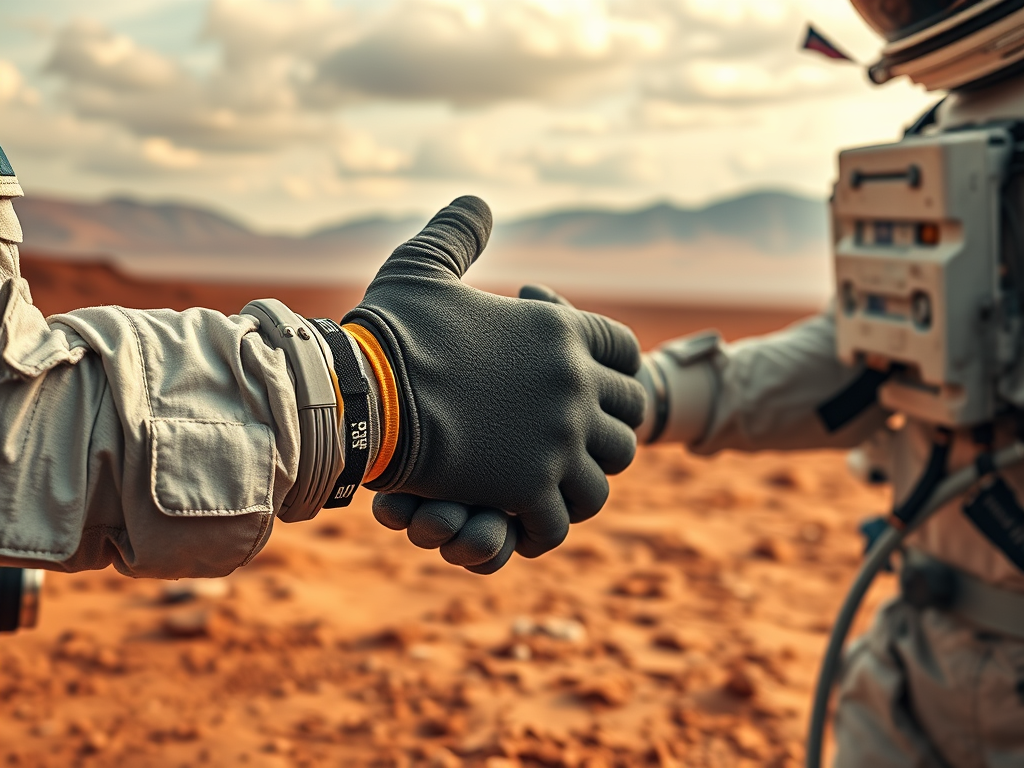
    The simple act of shaking hands, a universal gesture of greeting and agreement on Earth, takes on a whole new level of complexity on Mars. With its thin atmosphere, frigid temperatures, and pervasive dust, a Martian handshake becomes a carefully choreographed event. Let’s delve into the intricacies of this potential future social interaction.

    Differences from Earthly Handshakes:

    • Suit Constraints:
      • Martian explorers will be encased in bulky pressurized suits. This significantly limits dexterity and tactile feedback. Traditional handshakes, relying on subtle pressure and grip, become challenging.
      • The gloves of a spacesuit are rigid, reducing the ability to feel the other person’s hand. Therefore the hand shake becomes more of a visual confirmation of greeting, rather than the feeling of the hand shake.
    • Atmospheric Pressure:
      • Mars’s atmospheric pressure is less than 1% of Earth’s. This means that a breach in a spacesuit, even a small one during a handshake, could have severe consequences.
      • Therefore any hand shake must be done with extreme care.
    • Dust Contamination:
      • Martian dust is fine and pervasive, easily clinging to surfaces. Spacesuit seals and joints are vulnerable to dust contamination, which could lead to leaks or mechanical failures.
      • This makes cleaning the gloves of the space suit before and after the hand shake a high priority.
    • Temperature Extremes:
      • Mars experiences extreme temperature variations. Spacesuit gloves must maintain a stable temperature, and any physical contact could affect this balance.
      • Extra care must be taken to not damage the heating elements within the gloves.

    Safe Handshake Protocol:

    1. Suit Integrity Check:
      • Before any physical contact, both individuals must perform a thorough suit integrity check, ensuring all seals and joints are secure.
    2. Gloves Cleaning:
      • Clean the exterior of the gloves with a specialized dust removal tool.
    3. Controlled Grip:
      • Extend the gloved hand and establish a firm but gentle grip. Avoid excessive pressure or sudden movements.
    4. Visual Confirmation:
      • Due to limited tactile feedback, rely on visual confirmation of the handshake.
    5. Post-Handshake Inspection:
      • After the handshake, inspect the gloves and suit seals for any signs of damage or contamination.
    6. Decontamination:
      • After returning indoors, the space suits, and especially the gloves, must go through a strict decontamination proceedure.

    Should We Shake Hands on Mars?

    • While the gesture itself is symbolic, the risks involved are significant. Spacesuit integrity is paramount, and any unnecessary physical contact increases the potential for breaches.
    • In the early stages of Martian exploration, prioritizing safety and mission objectives is crucial.
    • However, as Martian colonies grow, and space suit technology improves, there may be a place for a modified Martian handshake.
    • Instead of the standard earth hand shake, perhaps a simple light tapping of the space suit gloves would suffice. This would allow for a cultural exchange, while reducing the risk of suit damage.
    • Ultimately, the decision of whether or not to shake hands on Mars will depend on a careful balance of cultural significance and safety considerations.

    In conclusion:

    The Martian handshake is a fascinating concept that highlights the challenges and adaptations required for human life on another planet. While the risks are currently high, future technological advancements and evolving social norms may pave the way for a unique Martian greeting.

  • William McKinley’s Canine Diplomacy: When the President Taught His Dog to Shake Hands

    As the 25th President of the United States, William McKinley was known for his statesmanship and diplomatic prowess. However, few are aware of his unique approach to international relations – one that involved a rather unlikely ambassador, his beloved German Shepherd.

    Determined to leave a lasting impression on foreign dignitaries, McKinley spent countless hours training his canine companion to walk upright and extend a paw in a formal handshake. The sight of the President’s dog greeting visiting officials with such poise and decorum was a spectacle that quickly became the talk of political circles.

    McKinley’s unconventional tactic proved remarkably effective, serving as a disarming icebreaker that helped put even the most stoic of world leaders at ease. By leveraging the inherent charm and charisma of his four-legged friend, the President was able to forge deeper connections and navigate delicate negotiations with a unique flair that was distinctly “American.”

    While this canine diplomacy may seem quirky by today’s standards, it stands as a testament to McKinley’s innovative spirit and his unwavering commitment to projecting a strong, yet approachable, image of the United States on the global stage.

  • What Your Handshake Says About You

    What Your Handshake Says About You

    Your handshake speaks volumes about you as a person, more than you might realize. It is often considered the most influential interaction one can have with another individual. The way you shake hands can convey a sense of confidence, trustworthiness, and respect.

    Whether it’s a firm grip indicating strength and assertiveness or a limp handshake suggesting weakness or timidity, each variation can shape how others perceive you. A good handshake exudes positivity and openness, while a bad one may inadvertently communicate negative traits.

    The subtle nuances of your handshake can reveal aspects of your personality – from being genuine and happy to reserved or even deceitful. It is an integral part of non-verbal communication that sets the tone for any encounter and leaves a lasting impression on those you interact with. So next time you extend your hand for a shake, remember that it’s not just a physical gesture but a reflection of who you are as an individual.

  • How to Shake While Carrying a Stack of Gifts

    How to Shake While Carrying a Stack of Gifts

    During the festive season, it’s not uncommon to find ourselves juggling a stack of Christmas presents while engaging in social interactions. However, this can pose a challenge when it comes to traditional handshakes. In this article, we will explore alternative approaches to handshaking when your hands are full and discuss how to respond gracefully if others react negatively.

    When your hands are occupied with presents, it’s essential to find a way to maintain balance while still acknowledging others. One option is to carefully position the gifts against your body using your forearm or against a nearby surface such as a table or wall. This allows you to free up one hand for shaking while ensuring the safety of your precious cargo.

    In situations where balancing the gifts becomes challenging or potentially risky, an unconventional yet creative alternative is shaking feet instead of hands. By playfully suggesting this approach, you can bring humor into the interaction while acknowledging that your hands are otherwise occupied. Of course, it’s important to gauge the comfort level and receptiveness of the other person before attempting this unique handshake variation.

    Despite our best efforts, there may be instances where others react negatively or express surprise at our unconventional handshake attempts. It’s crucial not to take offense and instead respond with grace and understanding. Apologize if necessary and explain that you are carrying gifts that prevent you from engaging in a traditional handshake at that moment.

    Remember that every situation is different, and adapting accordingly is key when navigating these unique circumstances during the holiday season.

    Shaking hands while carrying a stack of Christmas presents can be challenging but not impossible! By finding alternative approaches such as balancing gifts against your body or suggesting footshakes in good humor, you can maintain etiquette while acknowledging your limited hand availability. Should others react negatively, responding gracefully and explaining the situation will help diffuse any potential discomfort. With these tips in mind, you can confidently navigate social interactions during the festive season without compromising on spreading holiday cheer.